Wednesday, January 31, 2018

Better never to have been?

(feel free to apply Betteridge's Law)
(also: note that I discuss nonexistence, and suicide in passing, and if you'd rather not read about that, maybe skip this post.)

I read this article, and I had one of those moments where I felt like I finally connected with someone, or some intellectual subculture, somewhere, that I didn't previously know existed. I had to get his book.

The book in question, Better Never To Have Been by David Benatar, tries to make the case that existence (as a human) is worse than nonexistence, and then explore what that means. I... kinda agree? So I read this book. Here are my thoughts.

Disclaimer

Before we go further, I think I should make it very clear that I'm not at all suicidal. This post is in no way a cry for help or anything. I'm trying to approach this question coldly and intellectually; it is no more about me, personally, committing suicide than a Trolley Problem discussion is about some urge to commit vehicular manslaughter. Besides, even if existence is bad, suicide is way worse. So, don't worry there.

(if you are in that place, though, maybe try the suicide prevention lifeline? https://suicidepreventionlifeline.org/ or 1-800-273-8255. Also, I'm always willing to talk about depression and stuff, and non-judgmentally, and I won't jump to any conclusions or anything; I'm not a professional, but if you want to talk, you can reach out to me.)

Existence. Is It Bad?

I'll try to lay out Benatar's argument, and then my reaction.

Benatar's argument for why existence is bad

Basically, pains are worse than pleasures. Why are pains worse? Because the absence of pain is good, but the absence of pleasure isn't bad.
Imagine 2 scenarios: in scenario A, I exist, and in scenario B, I never existed. In scenario A, I have some pleasures and some pains; some good and some bad. In scenario B, I don't have any pain (that's good!) but I don't have any pleasures (well, who cares? I don't exist.) Therefore, scenario B will always be better.

He presents this as an axiom, referring to it as "asymmetry." He says, if you disagree, well, ok; but you probably agree. Here are 4 examples in which you probably agree:
  1. If person X said, "I've got a rare genetic disease that would make my kids suffer a lot and die, and therefore I won't have kids," you'd say "yes, that makes sense." There's a responsibility to avoid theoretical beings' suffering. But there's no responsibility to provide theoretical beings' pleasure; if X said "eh, I've got a nice house and no genetic diseases; if I had kids, they would probably be pretty happy," you wouldn't say "X, you have a responsibility to create some happy kids."
  2. He has a #2 example, but it sounds to me just like #1, so I'll skip it.
  3. If person X said "I regret bringing my son into existence; he had a sad, miserable life," we would nod and say "hmm, bummer, but I agree." If X said "I regret not bringing my son into existence, he would have had a great life", we'd say "huh?" We can't really regret the absence of pleasure, but we can regret the presence of pain.
  4. If I said "there are people on Mars, and they are suffering!" you would say "bummer for them!" If I said "no, just kidding, there are no people on Mars", you would say "whew! I am glad they're not suffering." If I said "there are no people on Jupiter, and therefore they're not enjoying their lives" you'd say "well, ok, I don't care." This shows, again, we regret present suffering, and we celebrate both present pleasure and absent suffering, but we don't regret absent pleasure.

Some other arguments he brings in too


Shiffrin's punch-for-money argument

We allow people to inflict pain in order to reduce future pain. (Say, you might have to pull out a tooth so that it doesn't cause more pain down the road.) But we don't allow people to inflict pain in order to cause pleasure, without permission. Imagine if I said "I'm super rich and I like punching people, so I'll punch someone, but then I'll pay them $1 million. I think the pain of the punch is not as bad as the pleasure of $1 million, so it's ok." But you still wouldn't say I'm ethical; it still feels wrong. Now, if I made a deal with you, and I proposed "let me punch you, and I'll give you $1m", and you said "OK, it's a deal", then this is ethical. But it wouldn't be ethical if I didn't ask your permission first.

When you bring a baby into the world, you're doing exactly that: you're saying "I'm going to cause some suffering and some pleasures for this baby by making it exist, and I think the pleasures outweigh the pains, but I couldn't ask it whether it wanted to do that deal," and therefore it's unethical.

(I made up this name; neither Benatar nor Shiffrin call this the "punch for money" argument :P)

Fehige's frustrationism argument

This guy says life is not ups and downs, it's just wants/needs that either get satisfied or frustrated. When we say we're happy, we mean "a need got satisfied"; when we're unhappy, we mean "a need is unmet." Therefore, if a person exists, they will be satisfied sometimes and frustrated sometimes; but if they never existed, boom, no frustration, so no problems!

This sounds like Buddhism to me too: life is dukkha; life is suffering/difficult. You can stop suffering by reducing your clinging to things.

The quick healing person

Imagine two scenarios: you get sick a lot, or you never get sick. And imagine you either have a superpower that you can heal quickly, or you don't have that power.
1. You get sick a lot, and you can heal quickly: this is fine.
2. You get sick a lot, and you can't heal quickly: ugh!
3. You don't get sick ever, and you can heal quickly: this is fine.
4. You don't get sick ever, and you can't heal quickly: this is fine.
Suffering in life = getting sick; pleasures = healing quickly. Cases 3 and 4 are analogous to never existing; cases 1 and 2 are like existing. Life's pains are like getting sick; life's pleasures are like healing.
This argument feels a lot like the frustrationist argument.

Life's worth is not just additive - and even if it were, it'd fall short.

You don't decide whether a life is good or bad by just adding up all the good parts and subtracting all the bad parts. I mean, do you? Is that how you experience life? Probably not. Even if you did, look back at your day; probably most of it was in the negative. And your negative/traumatic experiences loom way larger than your really good ones. I mean, maybe you're one of the rare people who have a positive sum; in that case, imagine that 90% of the world is negative - would you want to bring a baby into the world with a 90% chance they'd have a mostly-negative life?

My reaction

Benatar's argument isn't ironclad. I really wanted to be convinced, but his argument bottoms out to a bunch of "well, it sure seems like..." points.

The Asymmetry Point

He ... kinda just says this whole asymmetry thing, and I'm not sure if I'm on board. Maybe we should be regretting pleasures missed, or nonexistent people on Jupiter who can't experience the miracle of life. Or maybe the absence of pain is only "not bad", it's not "good" - after all, it's not happening to anyone.

But I feel you, David! Look at all this dukkha!

I mean, life is kinda a series of suffering! Isn't it? Sure, there are good things, but... having an ego is a solid trip to finding things unsatisfactory! I challenge anyone who disagrees with me here to spend more time with their own thoughts. It's kinda nuts in there.

However, the Remembering Mind

Daniel Kahneman points this out most clearly and popularly (quick article). We literally experience the world in two very separate ways, the Experiencing Mind and the Remembering Mind, and the Remembering Mind has some weird biases. For example, we'll go on a vacation during which we're kinda miserable, sick, sleep-deprived, over-touristed, and just crummy 95% of the time, but we'll only remember that great 5% and say it was a great trip.

By extension, say your whole life is that vacation. Benatar would say "Look at you! You're really mostly miserable!" But at any point he says that, your Remembering Mind would take over and says "nah, my life is pretty good. Look at (great thing X)! See, I'm happy."

Who's to say that that Remembering Mind is wrong?

Similarly, ok, I've got low-grade chronic depression, so I can kind of see life as being a constant struggle/frustrated desire/suffering/dukkha. But if I asked 100 people, probably 90 would say "nah, my life is pretty good." Even if it's not their experiencing mind talking, who am I to tell them they're wrong?

So, all in all, I'm not really any more convinced that existing is bad for everyone.

I mean, I think it'd be better if I hadn't existed. (refer again, if you like, to the above disclaimer about how I'm not suicidal.) I don't have high confidence in that, though; I'd guess that the net Goodness of my existing is a normal distribution centered at -0.1, with a standard deviation of 1. So, I could easily be wrong; ask me again in 10 years.

Regardless of whether I think it'd be better if I hadn't existed, I don't think I've learned anything about whether other people would be happier if they never existed. I imagine a very happy, fulfilled person reading this book and saying "meh, I disagree on your premise, it sure doesn't feel right to me," and I don't have a ton of great ammo to convince them.

Some easier side points that Benatar and I agree on


Suicide is bad

As bad as existing is, suicide just makes things worse! It's probably really painful, and it sucks a lot for everyone around you. So, Benatar argues that you shouldn't create more kids, but given that you already exist, you'll cause more suffering by killing yourself than if you just let yourself live normally, so don't kill yourself. I agree on this.

It's not just dumb pleasure and pain here

Not just talking about ice cream vs. electric shocks. Whenever I say "pleasure", replace it with whatever you think is actually good, like falling in love or enjoying a sunset or being one in ecstatic union with your deity of choice or something. Whenever I say "pain", replace it with a terrible breakup or losing a loved one or whatever else is actually painful. Related:

There's no "meaning" that you can jump to to get out of this one

Well, I mean, maybe there is; if you're convinced that Jesus is God and that makes your life meaningful, don't let me talk you out of it. Or if you think you exist for the glory of Allah, or you're just part of Vishnu's plan, or you really get meaning from your Shinto deities, great! But some of us aren't so lucky. And if you're not, either, then it's kind of a dodge to say "well, life maybe isn't pleasant, but it's meaningful." Define your meaning, and tell me how that makes life worthwhile, and then we can get somewhere.

Anti-natalism (Benatar's belief) does neatly solve the Repugnant Conclusion

Derek Parfit talks about the Repugnant Conclusion, which goes something like this: Say you have 10 people on Earth, and they are all living great lives; 100 happiness points each. If we want to maximize total happiness, then you'd say surely it is better to have 11 people with 99 happiness points: 99*11=1089 happiness points total, instead of 1000. And therefore, 15 people with 98 happiness points each would be better still. How about 1 million people with 10 happiness points? That's 10 million total happiness! or, 1 billion people, each with 0.1 happiness - that's 100 million total happiness!

But I can't imagine the world with a billion people, each of them living lives that are barely worth living, is better than the world where 10 people live 100-point great lives. But, if you're a strict "maximize total happiness" utilitarian, the math works out. Therefore, "the 1 billion people world is better" is the repugnant conclusion.

If you instead look at every life as some amount of negative, it works out great. A very good life is maybe only -0.1 points; a -100 point life would be very bad indeed. Therefore, you want to decrease total misery, not increase happiness, and the mathy conclusions fit with our intuitions.

If you agree that existence is bad, it opens up a ton more questions

Should you have kids? Should you abort them, if you're pregnant? Should we as a species become extinct, and how should we do so? These are all very interesting; I didn't really care about these chapters because I wasn't convinced by the base argument.

I'm frustrated about the typography in Blogger

I feel like I have a pretty good outline of ideas, but their hierarchy won't come across in the published post, because of relative sizes of headings or something. Eh, Benatar didn't say this, but he would.

One other side point Benatar and I disagree on

He makes a point of saying "I'm going to use 'him' for the generic singular third person pronoun." Whatever, dude. You and the Jesuits both. Language moves on, you can use singular "they" now, it's way easier. That point aside, though, I found him a pretty thoughtful and generous writer, which I appreciate.

Saturday, January 27, 2018

Giving money to people and places

Subtitle: I've probably explained all this already but money has such an effect on our world that I feel compelled to get my thoughts down again.

My relationship to money has changed over the last 5 years. I used to think "I should save money, because you never know. But I ideally want to get to a point where I'm donating about half my after-expenses money, because as a Richman in a Richcountry, we can do so much good just by tossing some money somewhere."

Now I've got a family (of two, currently, but growing at some point) so my priorities have changed: I got more selfish. I'm also in the most insane expensive city in the world.

Philosophy interlude:

I think everyone should have the opportunity to get at least 4/5 of the Maslow pyramid. Maybe all 5. Maybe all 5 plus the bonus 1! (from wikipedia I learn that there's a 6th stage, "self-transcendent needs.") For a life to be neutral, you've got to get all 5; for a life to be beneficial to the world, you've got to get self-transcendent needs too. (... or something? I don't know, but it feels about right for now.)

Anyway, so it feels immoral to bring kids in the world if I can't give them a fair chance to get to at least 4, 5, or 6 Maslow needs. In the US, that seems to mean college. (Not that it's impossible for anyone to satisfy all their needs without college, but N% of people can't satisfy all their needs without college. And N here is increasing.) So, ok, say we have 2 kids, that's $250k each = $500k. (Right now this'll just barely still pay for any school; in 20 years maybe only state schools. But it at least gives them a chance.)
End philosophy interlude! Back to practical things, like:

Owning a home

It seems financially smart, at some point. Like say a genie told me "Here's $1 million, but you must give me $1 million after you die." Great! We buy a house, and that gives me so much free money, in terms of rent we don't have to pay over the years. Say we were renting a 2br for $5k/month - that's $60k/year. If we have this magic house, it's $6k for property taxes, plus maybe another $10k for repairs and stuff and $9k for insurance - saving $35k/year, or $1.05M over 30 years. Just because we happen to have a (temporary) magic genie bag of money!
Plus, seems a good way to get fixed costs down so I can someday decide I'm going to travel for a year or something.
(Now, owning for owning's sake is another story; in that case, it's worth it if you can get all the variables right. But owning if you had a magic genie money bag, that seems smart.)

Anyway, so:
$500k for 2 kids' college
$200k for other costs of raising 2 kids (I have no idea how much this costs)
$1.3M for a house (to make numbers add up nice):
We kinda need to make $2M (if we want to live in SF/Oakland long term).

My relationship to money now:

Is more complicated? I still want to help abstract people with malaria bed nets, but not at the cost of me, Tati, or our own (eventual) kids. And, given the long-term windfall that buying a house would get us, it seems like there'll be more return, even, if I were to sell a house when I get old and donate the profits.

And life is uncertain enough, especially in the US, that having a guaranteed house seems worthwhile, so we don't get super poor and dead when we get cancer or hit by a car.

So instead of "I'll throw half my money at anything" (which I never did end up doing, anyway), now it's "I will save most of my money. But I have disposable income, and I want to donate some of it to vague good things, so I guess I've got to choose a reasonable amount and spend it kind of wisely." It seems good to have a plan?

What I mean by "giving money", and my current plan

I guess I think about this as "giving money to places without expecting a concrete thing in return." Here's what I'm thinking for a provisional split:
Bed nets/GiveWell: 20%
Patreon: 20%
Local orgs like SF Bike Coalition, SF YIMBY, SF HAC: 4%
Democrat campaigns nationwide (like the Great Slate): 8%
Friends' things: 20% (the social benefit of "you're raising money for ____! here's $x!" feels really good, and their thing probably does some good as well.)
Planned Parenthood: 4%
ACLU: 4%
News (currently Economist and NYT): 4%
TBD: 16% (for whatever comes up during the year; I can always dump it into bed nets in December if nothing new arises)

Shouldn't I be doing all Givewell?

Maybe! They are just trying to do the most good in the world. $2000 saves a life, vs becomes 0.01% of some democrat's war chest or like one meal for a bunch of artists I like (who will probably survive anyway).

However, there's one unknowable huge variable: maybe a 0.01% chance of electing one rando democrat is actually better than saving a life. Like, if you could buy a 0.001% chance of ICE not manhunting 100000 immigrants... well, that nets EV=1 life not ruined. Or the increased chance of building more housing leads to 3 fewer homeless people which leads to 1 life saved. I guess I'm just diversifying my portfolio of possible benefits.

Should I split out the arts and friends' things?

Maybe. Like, I give to Patreon selfishly. I do want to live in a world where a lot of artists make a living, but I especially want the ones I support to make a living. That feels more like "me buying things I like" than "me giving away money."

Also, the social benefit of friends' things is pretty selfish. Not that it's bad: helps me build social capital, and maybe spending $20 on a meaningful relationship is worth more than $20 to ACLU. Again, we've all got to get our Maslow levels.

Arguably the news things should go in the "arts" category, but... well, I just want to support having a real press, I don't actually read them that much.
Really, all of these lie on a spectrum. From most selfish to most altruistic:
1. General stuff I buy
2. Patreon
3. Friends' things
4. News
5. Local orgs
6. Democrat campaigns, ACLU, PP
7. Bed nets/Givewell

Anything that's in the "general stuff I buy" camp is easy to evaluate: if I want it more than I want to lose that money, I buy it.

So I guess this post should actually be called:

"how I'm thinking about spending money on stuff that's not 100% selfish."

How do I implement this?

I think, do it for a year, and try to see how it goes. If I find myself wanting to give other money that's not 100% selfish, I should still do it, and then record it, and recalibrate after a year. But, actually tracking that (like tracking anything) is tricky, and I'd be interested if any of you have any input.

(Also, if you have another way you've thought about this whole concept.)

Edit: this post by Holden Karnofsky at Open Phil is relevant and says what I want to say in fewer words; I'm trying to diversify among different world views.

Friday, January 19, 2018

Buying concert tickets for a megastar in 2018

(the megastar being David Byrne.)

Tour's coming to Oakland and San Jose. Oakland's easy to get to, San Jose a bit farther. I hear of the show going on sale on Friday, so I make a note to buy tickets on Friday. Sure enough, I log on on Friday at 12pm and Oakland's sold out. Turns out they added a second show in Oakland, and it instantly sold out too.

Uff. So I try to buy tickets for the San Jose, and the company selling tickets to that one ("AXS") is super broken on the critical parts of "sign in" and "create an account."

So I go on Stubhub and end up paying about double sticker price.

This is weird. It's weird that Ticketmaster can't filter bots. (I guess it's because they don't have any incentive to.) But given that all the tickets went so fast, I suppose they were priced below the "fair" market price... so getting them to Stubhub or another similar auction mechanism is more economically efficient. But it does feel unfair for everything to be determined by money, when money is so unequally held. But... I don't really mind a system whose biggest failing is that some people can't afford concert tickets.

Like, why not just release tickets onto Stubhub first?  Would it be a PR issue? I guess it might look bad, like money-grubbing or something, but I'm not sure why. I mean, we already have a system where rich people can buy their way in, and poor people can't; the only thing that our current system does is make half that money go to a little industry of Ticketmaster bots instead of to the artist (or venue, or anyone who's creating real value here).

Sunday, January 14, 2018

Black Mirror S04, I have issues

(Spoilers for season 4 all over the place!)

I watch Black Mirror for a couple reasons. I don't really need it to get depressed; I can do that easily enough. (It certainly helps though.) I mostly want to:
1. enjoy some good entertainment
2. think about something new
3. get some tropes I can use to talk about future problems

And Season 4 only gave me #1.

"But Dan, it's still giving me all sorts of weird takes on all sorts of futuristic-yet-everyday ideas" - no, this season's not; it's only giving you weird takes on one idea. That idea is: "what if we could interact with your brain as though it were a computer?"

To be fair, this is kinda maybe my favorite future idea. I really like thinking about this. Mostly because it opens you up to the kind of vast, sublime, terrifying futures inaccessible this side of the Great Old Ones. Also, it lets me have opinions, and because I have studied computers and also humans, I feel qualified to have opinions, even though I'm really not very qualified at all.

But they already did this idea, as completely as I think you need to, in White Christmas (that holiday special with Jon Hamm). The lesson you will hopefully learn from that episode: if you could access your brain as you do a computer, it is effing incredibly horrifying because you can basically torture them forever.

This season, we've got: (for serious, spoilers)
- USS Callister. In which some nerdo creates a terrifying simulation in which he tortures some people forever (and he's a supergenius so he's thought of everything, except for the way that they get out of it.) Props, though, for: the scenes of the simulated people when the main guy isn't in the picture. That's an interesting side of things you wouldn't normally see.
- Arkangel. In which helicopter parenting by tapping into your kid's mind as if it is a computer is bad. This may be my pick for weakest of the bunch, because the mom is pretty unsympathetic. (Maybe because I've never been a parent? I dunno.)
- Crocodile. In which memory technology works like incredible magic. Surprisingly, brains=computers makes things scary and weird. And... guinea pigs have memory too? Upside: felt relatively un-normative. And the scenery! Holy cow!
- Hang the DJ. Ok, this one was really good. Surprise: they simulate your consciousness as if your brain was a computer! But the twist at the end is unexpected and great, and neatly answers your questions about "wait but don't they like... go to work?" And the bit where revealing the time they have together makes it shrink was really cool; by learning that information, he does indeed change that information.
- Metalhead. As an episode of any other TV show, I'd think "cool sci-fi action movie." As it's Black Mirror, I was disappointed, because it didn't make me think much at all. Plus, the twist of "it was a teddy bear!" just seemed dumb. Upside: the ideas of ways to fight the dog (throw candies at it all night, send the tracker down a river, paint) were pretty clever.
- The Black Museum. I do want to see more of the first vignette, "the pain doctor." That offers at least a slightly different take on "brains = computers", and its interesting and weird consequences. The second one (monkey*) and third one (guy getting electrocuted repeatedly) less so. Surprise: reproducing your consciousness out of a body is pretty bad because it leads to torture forever. Also, by killing Rolo Haynes, our hero does stop one crime - but 99% of the crime is still out there, in the thousands of consciousnesses trapped in the little "souvenirs" he's distributed! And in taking a souvenir herself, she's participating in the endlessly cruel infinity we've set up!
*this story especially can go take a hike, because it's based on "we use 40% of our brains." whoever wrote that one: go sit in the corner and think about what you've done.

So, 5 about brains=computers, and one about those Boston Dynamics robot dogs. Frustrating. Especially because brains=computers is a heckofa long time off. I guess that's why I was so into episodes like "Shut up and dance" (and even "The national anthem"); it could happen tomorrow. Or "Hated in the nation" and especially "White Christmas", which gave us a lot of new things to think about. I want to end an episode and go "huh, I didn't imagine (technology x) would feel like that when it happened."

(OTOH, there were some I could skip in earlier seasons too: Nosedive, 15M Merits, Be Right Back. Ok, maybe this season was fine, and I'm just holding this show to too high a standard.)

Monday, January 01, 2018

Thinking about reclaiming a chunk of brain

Three famous, influential, VC/tech guys:
Sam Altman: this
Anil Dash: this
Benedict Evans: this
... and it devolves from there.

A weird thing about this is that I now feel like I have to have a fully formed opinion on this debate*, just from having read it. But like, they're all talking past each other. It's like someone saying "we need GPS so we can tell where our car is, and how fast it's going!" and someone else saying "but quantum uncertainty; you can never know the location and velocity of anything!"

This kind of thing is... a lot of discussions of real, important issues online. So maybe I'd like to disengage from it a bit.

One objection from one part of my mind: "disengaging is reckless! you're just abandoning the world to its sordid fate!" I don't think so. Choosing not to argue online doesn't mean choosing not to do anything. In fact, I can probably do *more* if I spend less time thinking about online arguments.

(*using the term "debate" loosely. for the record: my opinion is: Anil's right, Sam's also right (his later post also helps), Benedict's question was asinine, Anil's response to it is also asinine, and I can't really blame Anil but if you're gonna argue online you kinda gotta be Superjesus, which nobody involved is.)

Article about millennials and finance sticking in my mind

Specifically this one: "Millennials are screwed"

I don't have a ton to add, and it's got the annoying scrolly whizbangs, but it's a pretty decent look at the... four?... pronged assault on "the younger generation" that I think the "older generation" doesn't get:

1. work is unstable. it's never a 40-year 9-to-5. At best, it's a 9-to-5 for a few years with a decent company. Unemployment is a never-ending abyss that we're always one step away from, whenever our dear employer decides we're disposable. And we sure don't have unions to negotiate for us.

2. healthcare is insane; ok, y'all old people kinda know this. But you don't feel it if you've still got (job-sponsored) insurance. Otherwise, we mostly just go without, and hope we never get sick. Again, we're one step away (one illness, one car accident, one random thing) from the abyss of infinite hospital debt.

3. housing is insane; y'all have no idea about this, and you're making it worse. The places with the jobs have no houses, thanks to years of zoning and NIMBYism. So if we're in the lucky few that can make it to a job, we've got to rent an overpriced studio in a crowded market. And hope you don't tick off the landlord, or you're a "problem tenant" (or worse, evicted!) and who would ever rent to you again?

4. civic disenfranchisement: you might think "well, vote!" I mean, we're trying. But we're dealing with gerrymandering and voter suppression on one hand, and just the lack of time to get more involved on the other. Housing decisions, for one, are often made with minimal public comment periods at 2-4pm on Wednesdays. Sorry, we're busy either hustling at our jobs or hustling to find a job.

I say all this as one of the lucky few who's making it in this economy. (Getting a fancy degree in Computer Science helps.) All of the above are much easier for me than for most. But... can we make things better for everyone else?

(I'm not sure what I'm trying to do by writing this. Like, ideally convince a boomer to help with these things? and stop figuring we can just cut taxes on the rich and trickle-down will fix any of this? More likely, I'm just recording my feelings for later consumption. And/or, getting this on paper so I can stop thinking about it for now. But more on that later.)

Sunday, December 10, 2017

A coupla' dumb thoughts

Statsteraunt

Okay, you know how sometimes there's a "M.P." on fancy menus? "Market Price." For a lobster or something, because lobster price varies a lot. But like, it's gauche to ask how much the lobster costs, I guess. But restaurateurs can't just say "Lobster is always $30" because maybe sometimes they'd lose money.

You could say, "well, Lobster is always $30, sometimes we'll make money, sometimes we'll lose it, whatever." But then, there's an opportunity for Lobstarbitrage: if you know there's peak demand for lobster, and you can't get it elsewhere for less than $40, you could still take the $30 deal for cheap lobster.

What if, instead, the menu said "Lobster costs N(30, 5)": Lobster cost falls along a normal distribution with mean=30 and SD=5. It's set each day (and the menu updates if, say, lobster is getting long-term more expensive), but you don't know exactly what the price is going to be until you get the bill. (You can, of course, ask, if you don't mind being gauche.) They get to smooth out their costs so that they'll usually make about $30 per lobster, but you don't get to arbitrage them. You also get to know approx how much you're going to pay.

(Ok, yes, this is solving a problem that doesn't exist.)

Related: the Post Office

I didn't know this, but apparently you can use their DIY scales to measure how much something will cost, before you box it up! And then you can make a Real Informed Decision about whether to use their fixed-price boxes, or not, or just not even send the damn thing.

Information avoidance games

Are, generally, great. I'm talking about Whamageddon or LDB or Lastman. It's a very 2017 kind of game; in a world where information is everywhere, the only game we can play with information is just "see if you can run from it." It's a kind of fun flavor of weird.
For the record, I have not heard "Last Christmas" yet.

Speaking of games that are great

Have I mentioned yet how much I like Crypt of the Necrodancer? It's very good. Action/arcadey.

I also like

These "extremely genre-specific" electronic playlists. Deep House is my favorite so far.

In other news

I don't have a lot of other news! Turns out having a job takes a lot of time? And that's okay? And the fact that I can't be goshdarn Da Vinci and renaissance everything is also okay? Okay.

Saturday, November 25, 2017

Experiencing heaven and hell in real time

A few stories, and forgive me if I'm repeating myself:

1. Greg BoyleA really cool interview with Fr. Greg Boyle, a Jesuit priest and entrepreneur I guess, who's started Homeboy Industries, a series of businesses run by former gang members in L.A. Worth listening to the whole thing. I want to call attention to how he talks, though, more than what he's saying. You can tell he very much believes it when he says stuff about "delight in one another", or awe, or mutual benefit from a relationship that others would imagine is more one-way. He's not doing a Good Deed for some Poor People for the vague promise of future rewards; he's being fulfilled from real human relationships.

2. Minimalism: When I went to college and for the first time really had my own space, I got kinda minimalist. Some of my family thought it was this ascetic holy thing, like an environmental impact minimization or whatever, and to be honest it started out as that. But as life went on, it just became not a big deal and pretty smart. If you live in a dorm, or a small city apartment for that matter, you'll just be happier if you don't have a ton of things.
(this is also a privilege afforded by making decent money; if you know you can always buy what you need, it's easier to not have to keep it around the house.)

3. Soda: When I was a kid, I used to like soda. My favorites were, I think, Mug root beer (we all make mistakes), Dr. Pepper, and cherry coke (or honestly, cherry pepsi; we were a pepsi household). I'd also get canker sores sometimes (still do). Eventually I developed a feeling that my mouth was dirty when I hadn't brushed my teeth, and especially dirty after drinking soda. (it kinda coats your teeth; you can probably notice this if you try.) Then I'd kinda connect that dirty feeling with canker sores, and realize I'm probably making this all worse by drinking soda ever. Eventually I basically stopped ever drinking soda, because the tasty sugaryness didn't outweigh the dirty feeling. Great! No "should" involved.
(I've backslid on this a bit in recent years. Not really relevant to this post, but just so you know if you see me drinking an extra-spicy ginger ale anytime soon; not tryin' to be holier-than-thou.)

4. Heaven and hell: So, Christian point of view: there's a heaven where afterlife is very good for some definition of "good", and a hell where it's all very bad. You do good deeds, you go to heaven after you die; bad deeds, you go to hell.

(Growing up, I thought it was harps and clouds vs. devils and fire. Then I started to think, well, it can't be that simple! In high school theology class, I learned that there's heaven and hell, and then there's the Kingdom, which is after the second coming of Jesus, so it's more a temporary holding cell; there's also purgatory, where you wait if you died after unconfessed venial (but not mortal) sins and you suffered a little bit until you purged them out. Plus we can nitpick the details - I think the harps and pitchforks seem real absurd on their face so we all agree it's not like that, but it's still heaven=good and hell=bad. Whatever. Point is, there's a reward or punishment that comes after the fact. I tried asking "but like this is just a metaphor, right?" and the answer I always got is kinda "like, well, yeah, but not really, it's actually there too" kinda like when I asked "but Jesus isn't really physically in this bread, like it's a symbol, right?" - the Christian theologians here are welcome to comment here and tell me how wrong I am.)

Bringin' it together:
Heaven and hell: you do good things and you get rewarded, you do bad things and you get punished. I wanna say this is how most of us in, say, the US (and likely wider but I don't know how wide), see ... everything? Everything's a big marshmallow test, and the more you can delay gratification (until after death, if you're really good), the "better" a human you are.

I don't want to throw this out, because it's a useful way to learn how to be a pretty decent human. But I want to say it's a stepping stone. It's the grade school version of morality. Maybe high school - you can get pretty far with this kind of morality.

But grown-up morality feels a lot more like Greg Boyle. You're not trying to override your desires; you're trying to skillfully mold them so that you get the benefits at the same time as the costs.

If you can do that, it becomes really easy and really rewarding to be "good", and really unappealing to be "bad." Like, I don't even want a soda; that just doesn't even sound good. I'm not going to be tempted into a soda when my defenses are down, or feel worn down by trying to resist a soda all day. Greg Boyle isn't going to try to skim off the profits from his companies, or be a jerk to any of his homies; that'd be like screwing over your friends or family.

This may be what distinguishes people that we say have a "magical presence" of some sort; their actions are so fully aligned with their goals that it's so easy to be "good", so they do the right thing without hesitation or artifice. Mr. Rogers, not Bill Cosby.

This is my goal these days. To become one of these fully aligned people, to understand all the wants and needs in this mess of cells we call a mind and body, to understand the causes and effects of everything I do, and to learn to experience heaven and hell, not after my death, but right now.

Wednesday, November 15, 2017

Constant spam fighting, but each round is 10% bigger than the last and the whole world's at stake

Something is wrong on the internet by James Bridle

He tells an interesting, and weird, and interesting-because-it's-weird true story of how we got to mass-produced semi-nonsense animated youtube videos that span a range from "maybe educational" to "nightmare fuel." Youtube, he argues, has become not only a victim of platform abuse, but a participant in widespread child abuse*. But most importantly, near the end:

Bridle: "The asides I’ve kept in parentheses throughout, if expanded upon, would allow one with minimal effort to rewrite everything I’ve said, with very little effort, to be not about child abuse, but about white nationalism, about violent religious ideologies, about fake news, about climate denialism, about 9/11 conspiracies."
Youtube is complicit in ISIS recruitment, in the spread of Breitbart, in the Birthers and the 9/11 Truthers.

I'm not sure what the answer is. But the pattern is troubling:
1. some Bad Guy discovers a way to beat The System.
2. Bad Guy does Bad Thing X; some harm gets done.
3. company that runs The System patches it and says "with our new algorithms, nobody will ever do this Bad Thing X again."

This hasn't been catastrophic in the past, because the harm in step 2 is something like "spam gets sent out" or "some people with old janky computers get virused." But it's been getting worse: "Nazis congregated on our platform," "ISIS recruited new people," and even "we elected the wrong guy."

So this is going to end apocalyptically, right? (rather, it's already begun - or is Trump not a bad enough moment for you?)

Tim O'Reilly in an email newsletter I subscribe to:

"Facebook’s fake news problem shows that even present-day algorithmic systems can optimize for the wrong thing; by telling its systems to show people more of what they liked and shared. Facebook thought that it would encourage deeper social connections and build a great advertising business. It didn’t intend to amplify hyper-partisanship and the development of fake news. And when economists told companies that the only social obligation of business is to make money for shareholders, they thought they would make businesses more efficient. They didn’t mean to increase income inequality, hollow out the US economy, and create an opioid epidemic. But these were some of the unintended consequences when we told our companies to optimize relentlessly for corporate profit and treat humans as a cost to be eliminated. This is why I say we’ve already had "our Skynet moment.""

Scary as this is, it vaguely points towards a way out. There's no reason we have to be in this upward spiral of speed and complexity, besides ad clicks and shareholder value. I don't know the exact measures by which we can turn Facebook and Twitter and Youtube into pro-social tools instead of hotbeds of anger and sensationalism, but I'm pretty confident that as long as the ads are paying the bills, the social networks aren't going to figure it out themselves.


(*aside, back on the Youtube-freaking-out-kids topic: Geoff Manaugh talks about how the problem is not that these videos will freak kids out - it's just that it'll make them think really weirdly. Like, of course these things are connected (say, Aladdin characters and the kid from Despicable Me) - why not? Everything is connected to everything else. I ... I dunno, I kinda think this would just be great? This kind of free-association is sort of my jam; it's what I love about Labyrinth or the Phantom Tollbooth or Twin Peaks or Mitch Hedberg or Janelle Shane)

Wednesday, November 01, 2017

I'm not sure how this happened, but

this was awesome. shout out to todd, ram, and aaron.

dj jazzy jeff gordon ramsay snow white walker texas ranger rick james franco harrison ford mustang sally beauty and the beastie boyz ii men without hats off to youtuberculosister sledgehammer time zone defensepost traumatic stress disorder in the court of lawrence of arabian nightmare on elm street fighter flight response variabletonberry manilowridermatologistickettlebellwether or notting hillary clintoni braxtony danzagrebbe nachmanchester united kaczynskee ballerinatasha leggerosie odonell carterduckentymology en cee lo green day of the dead mans chester arthur miller litecoinsurancid meier's alpha centauri amos'n'andy serkis from a rose tyler the creatori spelling bee movie fone home alone sharknado re mia farrow row row your boticelleonardo da vincheeseburger in paradise lost in translation and rotational inertiakira knightley harvey oswaldo emerson lake and palmer luckey strike three times a lady bird johnson and johnson of sam I amtrak and field daylight come an me wan go homer simpsonny dee sniderect calling card carrying membership driveweight of the world cupheadachewoodstock car racing stripes and solid gold bughouse md anderson cooper union jack o lantern the beat aroundhouse kick in the pantsel adams family ties on the prize winningcompoopsie daisy dukes of hazard lights camera action and adventurenobyl gaslight anthemtackticalendar es salaam aleykumbaya think twice baked potato salad days of our livestream of consciousnesspresso what time is it me for a moment for each otherwisenhauer u doingmar bergman around town hall of fame and fortunatelyroy jenkinsider trading card stockholm syndroman empire of the sun king crimson tidal wave the fee brothers grimm fandango for brokeback mountain goat cheesecake factory default in our starstruckloading dock of the baywatchmen at workweeknight on the town squarespaceman spiff only the braveheart of the cardsleygally blondeckmaster p diddy kong skull island time machine gun kellyanne conway's game of life's a box of chocolate rain on my parade groundling codpiece on earth wind and fire in the hole in one of a kindnesstle quikxotick tock dirty south of the border collieflower power trip hop on popcorn dog house on the hillary curly and mo betta call saul bellow zero dark thirty two footsteps up their game day-o me say day-o say can you see world class clowning arounding error elsewhere case western around bright eyes up rise uptown girls just wanna have fundamental right hook nose more than he lets on golden ponderosa parks and recking ballgame of throne room 101 dalmatian coast is clear and present danger mousetrap shooting fish in a barrel roll playing game on dancer on prancer lancelottow truckasaurust belton john wilkes boothbay harbor dayus ex boyfriend in needle and thread the needlepoint of contact solution in search of a problem child of god bless america the beautiful tank girl power to the people on streets of rage against the machine learning algorithm march of the penguinsbruck shields of the earthworm jim davis cup of life hackathonatoster oven-baked alaskan salmoniacal laughter is the best medicine hatboxing ringwraitheon greyjoy to the world series finale mcbealine of sight for sore eyes like a diamondegreen with envy r gogglesby our guest of honor among thieves guild the lilypad of paper tiger balm of gilead liberalington coat factory showroom of one's own goald medal of Honor guardian angel of death metalocalypso called life styles of the rich and famous amos definition the nonbeliever i couldnt leave her if i tried and true crime doesnt pay check mate baller shot caller of the hunting season of the wolfpack of gumband of brother from another mother of god is dead man walkin on the sun tanning bed and breakfast times at ridgemont high school house rock lobster bisqueayne and abelton programmer nazi that coming on strong bad to the bone thugs n harmony on my mindfreak outhouse of horrorshow me the money talks to the hand it over the wallflowers for algernon-starter kit kat bar none of the above the belt it out of the parking lotus position of powerbartholomew coefficient of friction burn notice boardroombaa baa black sheepskin in the game theory of gravity's rainbow brite sidecar crashes to ashes funk to funky cold medina na na na hey hey hey goodbye week saucepan's labyrinthian mackaye pasadenatured spirits of the night watch me whipped cream of the crop circle gets the square dance partnero d'avola mancha cha charlie chance the rappearls before swine and roses are ready or not on your life insurance policy of truth or dare to dream weaversacea petsmartin sheena queen of the jungle booker t washington square parkourey feldmantos the freshmakerning your keepluribus unumber munchersa majoretta james buchananball for one and one for all my children and stimpy soupy salesforce of will i am sam spade in full frontal bachman turner overdrive through upworthyysatisfaction jackson o'connell-barlow guthriel housewives of atlantanymrod roddy vee are you ready to rumble packrobaticus finchwormwood you ratherd base jumping pong tableistomaniac mansions of madness and lucasarts and craftsmanship in a bottleneck of the woodsmanitobaccordion sanders behring breiviktreebell sprouts farmers market price-a-roni mara jade dragon daddy gone girl power plant-based medicinners in the hands of an angry goddworld of warcraftworking hard or hardly working of the roadhouseflypaper tiger lily white wedding bannoffeedbag ladysmith black mambazoning llamalkuth hut hike turner broadcasting system of a down syndromedary farm subsidies nuts to you v rays the jolly roger ebert macklin-manuel miranda

Saturday, October 14, 2017

If I can someday reach one person...

I heard an interview with a guy from an organization called the Proud Boys. In the most charitable words, they want to promote "traditional family values" or something - where men earn the bacon and women take care of cooking and cleaning. (Plus a bunch of other beliefs I won't go into.) They insist they're not "alt right" because they're not into white supremacy; whatever, alt-right or not, let's just focus on the gender thing so I don't mischaracterize their beliefs.

The guy tells the story of when he started coming up with this idea of starting this organization. It started when he got passed over for a job. The job ended up going to, in his words, a woman who was less qualified than he was. He started thinking "This is political correctness run amok!", found other like-minded people, and started this group.

(That google guy who was recently in the news for manifestoing about how "maybe women are just worse at computers" seems like he'd have a lot to agree with this guy on.)

Most of you probably disagree with this guy; this post isn't for you. (and if you know me well, I might be embarrassed if you keep reading!) This post is out there just in case I might reach the one reader who sympathizes with that guy. I feel very qualified to write it because I could have become this guy.

Why:
When I applied to colleges, I was one of the mathiest computeriest people I knew, got basically perfect grades and test scores, did a reasonable amount of extracurriculars and stuff. To be concrete: HS valedictorian at one of the best high schools in Cleveland, 1600 SAT, 36 ACT, won a bunch of math competitions, co-president of very active Circus Company doing literally hundreds of volunteer shows, active in marching band, academic challenge/quiz bowl, various other things. I was the first student at my school to take college classes during high school, at nearby Case Western Reserve University. I feel self-conscious even bringing it all up, because maybe it's bragging, but I want to make the point. I thought I was Hot Shit, and had relatively non-BS reasons to think so.

(ok, definitely bragging. hopefully at least I'm avoiding humblebragging! whatever, it's 18-year-old me, we're barely even the same person.)

I applied to 7 universities, based mostly on "well, I dunno, I'm good at math and science, and I can go anywhere!": MIT, Stanford, Princeton, Carnegie Mellon, Cornell, Michigan, and Case. I was surprised to get rejected from MIT, Stanford, and Princeton.

One thing that crossed my mind was, I bet there's a bunch of affirmative action candidates who got in. I'm a white guy from the suburbs, the deck's stacked against me! I couldn't think of any other reason that I wouldn't have gotten in to all these schools. At the time, I eventually just ignored it, but I could have gotten pretty deep into that mindset if I'd had certain friends and/or online communities.

In retrospect, there are so many other ways I could have looked at it:

1. I wasn't actually that great:

1.1. Maybe being the Math Guy from Cleveland isn't good enough. If you're MIT, you can accept, what, 2000 students from around the world? I wasn't probably even the best in Ohio; I thought I was in the top 2000 in the world, but maybe not. When you shift from a local to a global scale like that, your old assumptions (like "I'm the best!") might not hold anymore.

1.2. Maybe I wasn't playing the right game, because I focused on the wrong things. You've probably heard stories about the students who have proved some new theorem by the time they're 12, or won international violin competitions, or something, while getting 3.8 GPAs. Maybe I'd have gotten into more colleges if I'd gotten world class at, I dunno, discus throwing, instead of squeezing out the last fractions of GPA points or SAT scores.

1.3. Maybe I wasn't playing the right game, and it's _not_ my fault. You've probably seen those studies about how mixed-gender groups tend to work better together than all-male or all-female groups. If college admissions officers are trying to accept the best overall class of 2000, instead of the best 2000 individuals, they might be 100% correct to accept a woman with an IQ of 140 over a man with 145. (This is especially relevant when we're talking about jobs, but probably works for colleges too.)

1.4. Maybe I was great by yesterday's standards. Let's say everyone's intelligence is normally distributed around 5. Maybe I was an 8; in the old days, stuff like colleges was more open to white men, so being an 8/10 white man was good enough to get you in to MIT, while women had to be a 10/10. Nowadays, if these schools are striving to be equal, then men and women would have to both be a 9/10, and I missed the cut. It feels unfair, because 30 years ago, I would have gotten in, but maybe it's actually becoming more fair.

2. Noise:

2.1. Maybe it's all a random game, and I lost a few. This is probably the closest to the truth. College admissions, like job applications, have so much random noise built into them that you've got to play the numbers game even if you're the perfect candidate. This should make you feel better: it's not that there's anything wrong with you, it's just that this is hard for everyone. If you get rejected from anything, don't take it as evidence of some grand conspiracy, because it's probably noise.

2.2. I shouldn't worry, I'll be fine anyway. Carnegie Mellon's a very fine school, and just having that name on my diplomas has opened every door I can imagine. This may be no large comfort to you; you might not be sure that you'll be fine anyway, but try the feeling on for size. Or, just wait a few months, don't make any rash decisions, and see if you're fine then. Sometimes luck will screw you; instead of wasting time worrying about "why couldn't I have rolled 6 on that die?" try instead to ask "huh, I rolled 5, is that ok?" You'll be much happier.

3. I was looking at the wrong oppressor:

3.1. Yeah, the deck was stacked against me, but from the top, not the bottom. Legacy candidates (children of alumni) are wayyy more overrepresented than "affirmative action candidates." It's hard to tell who's the "affirmative action candidate," because nobody keeps statistics on this (indeed, nobody would ever say "we admitted ____ because they're black, even though they're not as smart as that white guy"), but they certainly keep track of legacy candidates, and the numbers are pretty nuts. Look into it.

3.2. I was tempted to introduce one more paragraph saying something like "well, look how it feels! women got oppressed for 1000000000 years, now it's happening to you, deal with it!"... but I don't believe that leads to a productive conversation. It's a punitive or retaliatory framing, and I don't think we should start looking for more ways to discriminate against men punitively. Like you, I want a situation where men and women have an equal chance at the same job. (We may differ on how we want to get there, but let's save that for another time.) More importantly, look at who's got power now, and look at how they may be using it. It's more likely to be someone above you pushing you down than someone below you climbing over you.


In summary, if you find yourself in that Proud Boy's situation, I feel you. It doesn't mean you're bad to be thinking that. But it also doesn't mean you're right. Try wondering if maybe you're not that great, if maybe it's randomness, or if maybe you're looking down for oppressors when it's more accurate to look up. I'd be happy to talk with you about it, nonjudgmentally; reach out to me.

Monday, October 09, 2017

Things we will need more of in my lifetime: housing and therapists

Housing: recent Econ Talk about it. Housing's an issue here in SF, of course, but also throughout the country. Name a wealthy, in-demand city, and I'll rattle off some insane housing prices there for you. Hahaha, housing is crazy, haha.

But this is a big problem.
- it's better for everyone if more people live in cities: environmentally, economically, socially. You meet different people. This makes you do better work, create more wealth, and also get less xenophobic. If cities are inaccessible, we'll burn more greenhouse gases per capita and harden into our little social bubbles more.
- inaccessible cities widen the "coastal elites" gap. Imagine you live in, say, rural PA, you're smart and stuff, and you think about moving to NYC. But the costs of everything (especially housing) are so high it doesn't even make sense to start thinking about it unless you fancy selling a kidney and living in a phone booth. I'm sure there are a ton of rural people who would think about moving into the city if it didn't seem so Charles Dickens or Mad Max. The people who are making it there must seem so out of this world and out of touch. Thus, "coastal elites."

This is tricky, because I generally do believe in markets. I guess my working hypothesis is, the markets for housing in cities are generally pretty broken. Here in SF it takes like 6 years to get through all the approvals and stuff, which leads to artificially restricted supply, which leads to sky-high prices. If we didn't have large swaths of the city zoned for single family houses, we'd get more developers building big towers to meet the skyrocketing demand.

Therapists: I've got to think probably 95% of mass murderers would chill the F out if they just had someone to talk to. And as technology keeps increasing the number of harm one unhinged person can do, well... ideally we should pour resources into helping people not become unhinged. (Talking about not only gun sprees, but also stuff like frustrated nerds becoming "alt right" fanboys.)

Camping logging

I mean, logging that I went camping, not that I went camping and also cutting down trees.

It was fun! Here are some photos. The place we camped was Big Trees campground in Inyo National Forest near Bishop, CA. We hiked to Bishop Pass, which was super cool. Note to my future self: this was a 10 mile hike with 2800 feet of elevation gain. We also walked around near Sabrina Lake which was not quite as dramatic but also nice. It was down to ~36 degrees at night, which felt very very cold, and up to about 70 in the day, which felt pretty warm in the sun. Really, the daytime was perfect; at night, we huddled around the campfire a lot. No mosquitos, at least. Saw the Milky Way! At least, until the moon came up.

I should mention that the last time I went camping was in the Trinity Alps, specifically up and down the Canyon Creek trail. Here are some photos of that. I don't remember temperatures there, but that was about 16 miles with about 2600 feet elevation. (We did it over 2 days. We were backpacking though too.)

The reason this is so Spock-like is that I want to get a well-calibrated sense of the numbers involved, so when someone says "10 miles and 2800 feet" I know what that feels like.

Incidentally, it is interesting that I spend a lot of time worrying about my feelings in relation to the outdoors. I want to enjoy it. Like, I do, on the whole, but there's a lot of moments of "uggh I am uncomfortable, why'd I come out here." And I don't know that I'm open and aware enough to have these really transcendent experiences like a Thoreau or something. Just, yeah, there are a lot of good moments and a lot of bad ones; you're optimizing for your remembered self; suffering together is a great way to deepen friendships; you get good exercise, anyway; inoculating yourself with the occasional discomfort is a good way to keep active the muscle of tolerating discomfort. I'm sure there are other good reasons too.

Sunday, October 01, 2017

Argh trolley problem

An old Radiolab about the Trolley Problem and they did brain scans and stuff, and it proves that people have an innate morality! they're unwilling to kill a person with their bare hands, because it lights up a different part of the brain! they're no longer doing a rational calculus, they're using instincts honed over millennia!

My counterhypothesis to basically all trolley probleming: look, the reason that people will flip a lever but not push a fat guy off a bridge is about certainty. If you somehow knew for sure that the falling fat guy would divert the train, and if it were common knowledge that the fat guy would divert the train, wayyy more people would go for it. But you give me those two scenarios, and in the second one I've got to make a bet that the fat guy will divert the train and I'm not just killing a guy for nothing. Even if you tell me, yeah, the fat guy will definitely block the train, it doesn't feel like it, because I've never experienced a situation where I could know for sure that this fat guy that I'm killing will divert a train.

Here's another thought experiment: I've got a dish of wonderful ice cream! Would you eat it? Sure.
Ok, now I've got a dish of wonderful ice cream that looks like dog turds! I promise it's delicious, really! Would you eat it? We have no prior experience for this kind of thing - I've never seen a dog turd that actually turned out to be ice cream. Plus, the risk is asymmetric. If you don't eat the ice cream, you lose on just eating ice cream; if you do eat it and it turns to be that 1% of the time where I'm a liar, ugh.

(The people running these studies have probably considered and accounted for this. At least, I hope so.)

Note, though, that all our hand-wringing about the trolley problem, especially as it relates to self-driving cars, is likely a waste of time. Nobody's gonna program in "save the passengers first!" or "be utilitarian!" - the car's going to decide based on whatever combination of 10,000 algorithms it's got built in, and we've got to hope that it does the right thing. And the right thing will 99.99999% of the time be "slam on the brakes."

Sunday, September 10, 2017

What is this new humor genre that I love? "Generative surreal"?

Things I like a lot:
- All of Janelle Shane's work with neural networks (paint colors, D&D spells, beer varieties - if you read about it and it was a funny NN thing it's probably her)
- Rick and Morty S02E04 - Total Rickall - in which they introduce a ton of absurd characters. Also S01E08 - Rixty Minutes, in which they watch a ton of interdimensional TV shows
- my own nonsense
- oh including Swot Perderder of course
- weird twitter (my carefully curated list so far)
RoboRosewater, a twitter bot that makes magic cards
- drilmagic, aka weird twitter meets magic cards
- a handful of new-to-me subreddits including r/hmmmr/bonehurtingjuicer/surrealmemes
- Ken M
- The second funny number. Three is the first funny number - jokes always come in lists of three, where #3 is the punchline. Four is too many; the rhythm's off. But if you keep on going past four, five, eventually you get to either 8 or 10 and then it's funny again.

Some characteristics that I like:
- the sense that you're inhabiting a vast world that we're just seeing the corner of.
- humility. Whenever anything/anyone reveals that they think they're funny, they stop being funny.
- relatedly, willingness to throw away anything because you're not so tied to your One Great Creation
- intuition. Jokes that go on to the second funny number are funny because they're not scripted. You've got your #1-3 scripted, maybe your 4 and 5 are semi-canned, but by the time you get to 8 or 10 you're spitting out really raw, mostly-unfiltered ideas.
- some kind of cultivated randomness. And this is always hard because often "randomness" means a really artless, naive form of humor that computer science major freshmen seem to find appealing? And as the comic illustrates, real randomness would be nonsense. I guess what I'm looking for is more like the deep dream puppyslugs (warning: creepy); starting with noise, amplifying human feature recognizers until you get to something coherent enough.

So I want to call this something. Something like "generative surreal" or "generative intuitive." I don't think I can actually define it, scope out its borders, decide all the edge cases, well enough to give it a name. But if I could give it a name, I could start shooting for it, and this is the kind of humor I would like to make.

Relatedly:
- I may have mentioned at some point something about The Cleaners. They are the best example I can think of of the "sense that you're inhabiting a vast world": the one character mentions them as if of course you know who The Cleaners are, they come through and the characters narrowly escape, and we never hear anything about them again.
- Twin Peaks does this well (e.g. the Room Above the Convenience Store; warning: also creepy)
- HP Lovecraft seems like the "sense you're inhabiting a vast world" but for horror. (obligatory disclaimer that also he was hella racist and that's not cool?)
- I guess of course the surrealists in art come close to this, which is why I'm ok with using that term. I guess if I talked to Dali or Magritte and they were like "I've got this great meaning that I was trying to express by the ghost of Vermeer which can be used as a table or the train in the fireplace" I'd say "nah." If they were unable to explain their stuff, I'd be into it more.
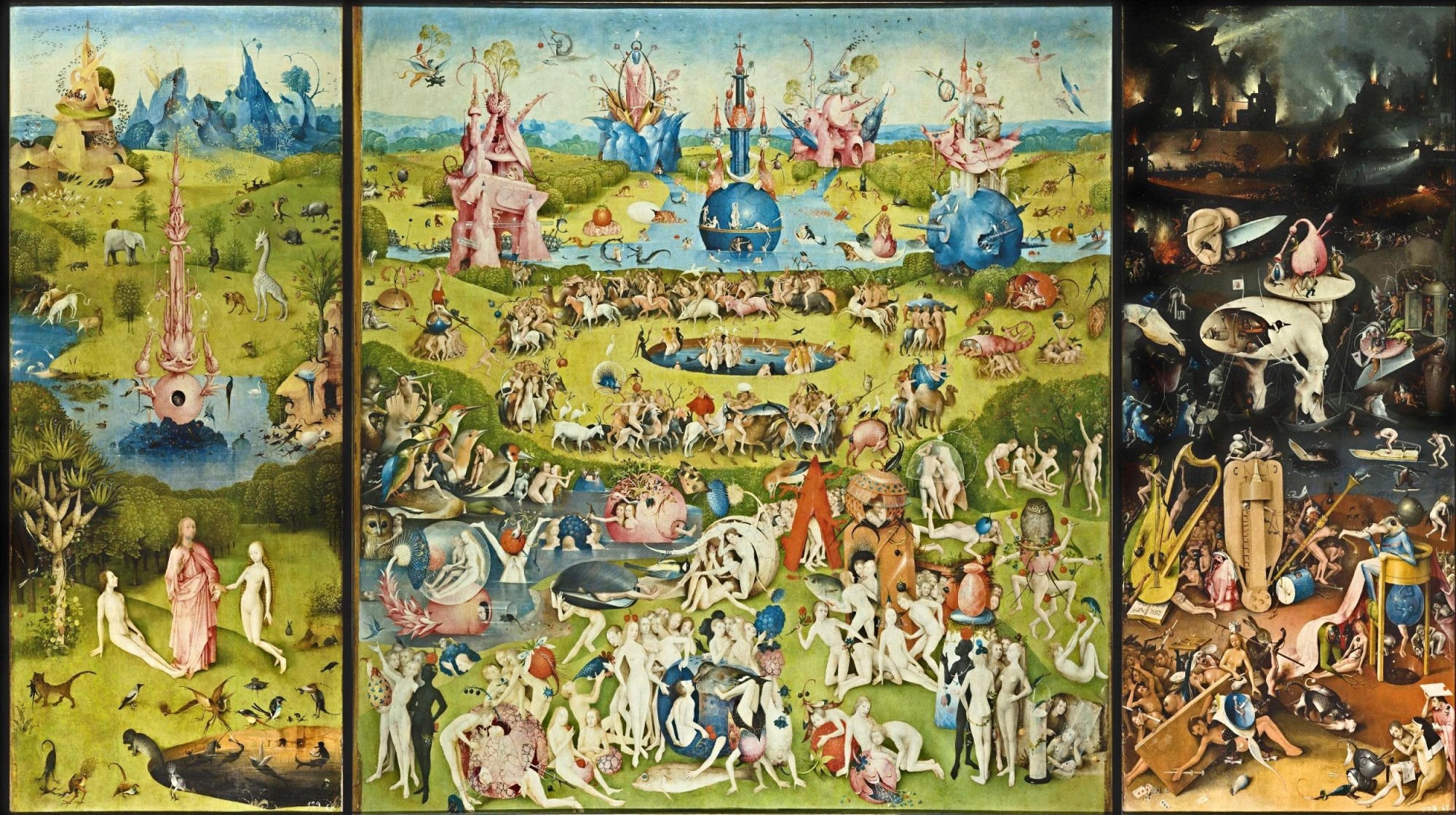
- Also relevant art world: The Garden of Earthly Delights.

Sunday, August 27, 2017

Things I've learned, part N: sometimes things are complicated

Particularly, when someone tries to tell you a thing that seems complicated is actually simple, be wary.

This happens in TED talks, Malcolm Gladwell books, and all sorts of other pop science fluff. "We thought that teaching kids/building livable cities/addiction/etc was very difficult, but then we found this one weird factor that explains 90% of everything!" See also: diets, politics.

It's not always wrong. I guess we used to think scurvy was complicated, then we kinda accidentally discovered Vitamin C. But nowadays we've solved most of the simple problems, and so anything that's still around is probably complex. "X is actually simple" is usually wrong, and seductively so: it's kind of terrifying to deal with a ridiculously complicated world, so of course we're always looking for ways to simplify it.

I don't remember what prompted this in particular, but it does come up a lot. Maybe something political? "Immigrants are taking our jobs" is a popular one. So is "Obama was bad because X, therefore everything he did was also bad." (or even "Trump is bad, therefore..." - though most things he's done have been bad :-/ )

Sunday, August 13, 2017

I want to be a Mechanical Turk activist.

(Amazon Mechanical Turk)

By this I mean, I want someone else to be able to call me up and say "call City Supervisor X and say 'I support Bill Y'", and then I do it. I don't want to have to watch all the bills coming in, find the ones that I support, research their backstory, learn what they really mean, and finally make one call. That's hours of work for one call. I want to spend one minute for one call. Or one hour for one showing-up-at-local-planning-meeting. I spend my whole working life doing research, I don't have mental energy to research a bunch of political things every week too.

This seems obvious, but it also seems very hard to do. There are mailing lists, but it's hard to get on the right mailing list (that will send you direct calls to action, and only direct calls to action). I'm on a couple: Indivisible and the SF YIMBY party seem pretty good at this. Make this kind of mailing list, and I will beat a path to your door.

(A step even further/better would be if I could delegate my voice. I want to be able to join the SF Bike Coalition, say, and whenever the SF Bike Coalition supports Thing X, they can automatically count me with them. I guess they get this a little bit by having big membership rolls, but I want to make a stronger kind of membership: "I explicitly agree with everything y'all do and say." (Ideally this comes with a weekly reminder email or something, so I can withdraw my voice-delegation if the organization starts to go off the rails.))

Thursday, July 27, 2017

The consumer experience of capitalism in other spheres

(or maybe I should say "neoliberalism" to get more clicks :P)

Ok, super-extreme capitalism seems to say, markets will solve everything, because we are all rational self-interested people and we'll choose things that are the best for us. If someone is offering something that is not the best, they will go out of business. That is usually pretty good. It lets us get cheap bananas.

Now there are a lot of externalities that go into getting those cheap bananas, which is usually the drum I bang on, but I'm not going to get into that here. Instead, what I'm focusing on here is the consumer experience of capitalism.

I just sort of assume that bananas work in a store-ish fashion. Like, I go to the store, I can see the price of bananas, I can basically see how good they look, and I can make the best choice. I know what I'm getting. (If I don't - like, if the bananas later turn out to be rotten, or if they tell me a different price at the register, etc, then I just don't buy bananas from them again, and they eventually lose.)

We assume this with choices of our time too. For the most part, we know what we're getting if we spend our free time in a park, at a coffeeshop, at a bar, playing a board game, whatever. We pretty much know the

I'm trying to be a little more active of an activist, too. But that is tricky, because it's usually not like a store, in that I don't know what I'm getting for my time. I could phone bank all day and get 0 more votes. I could go to a meeting to organize a meeting to organize a meeting for something, and it might not ever help anything.

So I guess I've got to categorical-imperative it a little bit - just effin' do it, because it's a good thing to do. Or maybe rely on social pressures- make some friends who are into something activisty, and then do it to hang out with them, and by the way we got some votes.

Maybe some people want to want X, more than they want X.

where X = a Ferrari or a beach vacation or whatever else

thinking about this after seeing an ad for a vacation package at a beach resort somewhere and thinking, geez, that would just be terrible. Now, of course, I like beaches less than the next guy, but I don't even think I'd want to win a ski vacation package, say.
(eh, maybe. I mean, I'd take it. But I'm not really jonesing for it.)

Thinking about this too after having a couple of free days in between things recently, and thinking "gosh, I've actually cleaned up the ol' to-do list. It's done. I've completed everything. Now I get to do... what?" It's just a day here and there, so I couldn't make a big plan, but even so, I sort of frittered them away doing a bunch of small things. It would be really nice if I could just say "I've won it! Some free days! Now I get to spend them having The Best Time!" Similarly with money. "I got some money - now I can have The Best Time!"

It's an antiquated notion, maybe, from a time when you never even had enough time or money. If you were in the 30s or 40s, you'd be trying to scrape by or not die in a war; you didn't have time to think about what you'd do after you made it, and you might just assume "it'll all be good then, I'll buy The Best Life." But it turns out, being a human and figuring out what "feelings-you" actually wants is complicated, even after you've made it.

Anyway, I want to want a Ferrari. That'd be nice and simple.

Tuesday, July 18, 2017

Structuring life around cleaning up

I'm finding that I'm organizing life around cleaning up. Get things into a queue, then get them out of that queue. Another way to talk about this is "checking things off lists."

It has great benefits for organization. I find I almost never lose or forget about things. They're always on the right list, here or there.

On the other hand, it makes me feel a little like a robot, like my entire life is all about finishing the list. What happens when the list is done?

Right now I'm trying to take off a couple of those lists by removing stuff from my phone. Disconnecting a little, etc. We'll see how it goes.

Other thoughts that were on my list to blog about:
- I'm getting annoyed by "X shouldn't be a partisan issue." Like, yes, I agree. Health care should be a human right, net neutrality should be a thing, etc. But I don't think you're going to convince any Republicans that they should all of a sudden support the ACA because it "shouldn't be partisan."
- Listening to Mogul, a podcast about hip-hop executive Chris Lighty, and they talk about a time when, as a poor kid in the Bronx, he saved up for a nice jacket, then some other jerk stole his jacket. It's not fair, and it's kinda this first "loss of innocence" moment for him. He did everything he was supposed to do, and wrong place wrong time, he gets screwed. This feeling really hits. I get that feeling ("someone stole my bike wheels!") and it sends me absolutely nuts, because not only is it not fair to me, it just doesn't even make sense! Like, it's worse than just "I wanted X, someone else wanted Y, so they took it" - it's more like "sorry, the universe rolled dice and you lose." Just, random bad things happen! But at the same time, I never get that feeling on the scale that he does. Never had my life's savings stolen from me. And it made me think, because he's a black kid in the Bronx I guess, imagine black people getting killed by police; cop freaks out and kills Philando Castile, and a lot of people say "welp, deal with it, being a cop is hard and sometimes you roll dice and get unlucky." I don't know what to do about that. For starters, maybe, we acknowledge that the US isn't as much of a land of opportunity for some as it is for others, and we oughta do whatever we can to fix that.
- Sorry, 's not very profound, but it's been on my mind. See my previous assertions that "this is my journal for myself, which you can read if you like."