Monday, July 08, 2013

My Soylent experiments, or, don't try this at home.

You might have heard about Soylent, this drink made by a bunch of Y Combinator softwaremen who wanted to have an alternative to eating food. Supposedly it has all the nutrients you need to be healthy. Now, given my extended joking about Food Cube, I was naturally intrigued.

Plus, they made it sound pretty easy. Make a list of all the nutrients you need. Buy vitamins and stuff until you have all those nutrients. Blend them together.

So I gave it a try. A run to the local GNC, a couple of things off the internet, and a big spreadsheet, and I had Homemade Soylent Version 1. It included whey protein, maltodextrin, olive oil, salt, a multivitamin, potassium chloride, monosodium phosphate, iron, fiber, calcium plus magnesium, and potassium gluconate. I'd tell you the proportions, but I don't recommend trying it.

It was awful. I made a 2500-calorie batch of it, drank 1/3 of it for breakfast, and felt sick all morning. I couldn't even think. It felt like I'd eaten a rock. After about half a day (and a couple trips to the bathroom) I could live like a normal human again. Whoops.

So I tried again. (naturally.) Same ingredients, different proportions: more fiber (25g), less calcium magnesium (think I had a little too much before), less maltodextrin and protein powder (for less overall drink), less iron (18mg is just the RDA for women. for men, it's 8mg).

I've almost made it through 1/3 of a day's supply now, and I don't quite feel sick. I don't feel particularly well, though, either. Plus, the thing is quite noxious. I am having a hard time drinking it, and I'm a guy who likes almost any food. I am guessing that a bunch of people who try this are going to find that, like me, they care about taste and texture more than they thought.

Still, though, good luck to them! Since I bought the ingredients, both the canonical example recipe (as made by the folks who are manufacturing Soylent) and the multitude of other recipes (as found on their forums) have evolved quite a bit, so it's likely that I'm just doing it wrong. But because every bad recipe means a day of drinking gross nonsense, I'm not inclined to experiment further.

(I did preorder a weeks' supply of the "official" stuff, though! I'll let you know how that turns out.)

Sunday, June 23, 2013

Makin' T-shirts

... is surprisingly easy.
1. print your design.
2. tape it to a non-corrugated cardboard. Tape a sheet of acetate (or "Dura-lar" - another plastic sheet thing) on top of it. Cut it out with an exacto knife.
3. tape the plastic sheet to a shirt. Paint on it with fabric paint.

Things to watch for:
- you might need some sticky-tack to stick the plastic to the shirt so it doesn't lift up.
- dab with the paintbrush, don't brush. Spongey brushes work pretty well.
- make sure your design works as a stencil. You might have to add some "bridges". Also, try to stay away from anything super-intricate
- if you cut some letters freehand, they'll look super jagged and sort of violent. This may or may not be what you're going for.

Without further ado, shirts 1 and 2:
 
(there is no punchline to this one.)


(this one is only punchline.)

Everything is broken and can never be fixed?

I got to talking with a friend about, uh, the state of the world, and she asked at one point, what's my take? At this point, it's something like pessimism. Here's why (and I'll constrain this mostly to the US here, just to make the conversation manageable, but of course many of these are worldwide).

We have a lot of huge problems. Environmental problems: global warming, water shortage, deforestation, extinction, smog, fracking, Pacific trash islands. Economic problems: shrinking middle class, unaffordability of school, constant unemployment, whatever. Health problems: obesity, diabetes, Alzheimer's, cancer. Political insanity, the war on drugs, the current US war-of-the-week against some country where the people are a different color and maybe have oil or communism, widespread creationism, same old crime, racism, misogyny, bee colony collapse. Oh, and now PRISM!

We don't have tools to deal with them. How do we deal with big problems?
- Technology. The smallpox vaccine stopped smallpox.
- Economics. Let the markets solve it! We've made things more efficient; affluent US people can now buy food and ipods.
- Laws. Now there are no laws against black people voting; there will hopefully soon be no laws against gay people marrying.
- Social action. MLK or Gandhi.

None of these work against threats that are complicated, slow, and devastating. Let's narrow the conversation even further to global warming (not because it's our only problem, but just so I'm not ranting for days). I guess renewable energy cheaper than coal would be a partial technological cure, but we're not there yet and I don't know if we will be before the temperatures rise catastrophically. Economic cures lead to nonsense like carbon offsets; does anyone trust "the invisible hand" to magically stop global warming too? Our laws are toothless (Kyoto etc) and there's no crucial moment that we'll all band together, no enemy to fight against, no one leader who will persuade us to do anything until it's too late.

The recommendations that we get fall ridiculously short. Apparently, if everyone lived my lifestyle, it'd take 4.81 earths to support us. If I recycle all my tin cans, carpool whenever possible, and buy organic food, maybe it'd get down to 4.7. People! This is not going to cut it! It's going to take technology, economics, laws, AND social action if we want to get down to 1 earth, and I don't see us using any of them.

I don't mean to just rant, but rather to ask: how do we live our lives and deal with this? The best answer I've come to is to do the little fixes, recycle my tin cans and carpool, and otherwise ignore it all. Enjoy the results of the life lottery that made me an upper middle class white male. Is there an answer that's less asinine or grim?

Sunday, June 16, 2013

Home distilling

I like rakia/schnapps/slivovitz/fruit brandy. I thought it'd be fun to make some.

However, turns out it's illegal. Which means that you can't really have an above-the-board operation, which means dependable information is harder to find.

However, you can buy a still kit, which is not a still, so it's not illegal.

However, that requires some heavy soldering or a plumber's torch.

(This guy seems to have useful info too.)

Making fruit wine (or even just beer) would probably be fun too, but the end product is not as exciting, so maybe I won't for now. Still (NPI), maybe these links would be useful to other would-be home distillers. Or, more likely, to me in the future.

Saturday, May 25, 2013

SF inequality, time overestimation, Soylent, sending money

"In California, there isn't a conflict between being a capitalist and a liberal." "The companies here are more than just playgrounds, they’re enclaves." I more or less agree with this.

How people spend their time. This is so interesting because we never get this data. The only data we get is data about how we feel like we're spending our time. "how we think we spend our time has little to do with reality. We wildly overestimate time devoted to housework. We underestimate time devoted to sleep."
"people who claimed their “usual” workweeks were longer than 75 hours were off, on average, by about 25 hours. You can guess in which direction. Those who claimed that a “usual” workweek was 65-74 hours were off by close to 20 hours. Those claiming a 55-64 hour workweek were still about 10 hours north of the truth. Subtracting these errors, you can see that most people top out at fewer than 60 work hours per week."
So, ignore the workaholics, reject stress culture, work 40 hours. 50 if you must.

Soylent discussions remain fun. (quick recap: guy makes smoothie full of vitamins, eats nothing else for 3 months, says it's awesome.) At first glance it sounds terrible, but hear him out; I think he reasons pretty well about all the weirdness involved. I tried to make it once, felt like I'd eaten a rock all morning, haven't tried again yet. But you can order some official Soylent from these folks on their kickstarter. Of course I did.

Send money with Gmail. Is Google finally bringing payments into the future? Where I can send you some money for free? I think so. (Also try Venmo, which works too.) If you want to get in on the gmail-send-money beta, let me know, I'll send you a penny.

Thursday, May 16, 2013

Ireland reminds me of New Zealand

It's beautiful and humble. I spent a couple days at a Buddhist center, thinking I'd get some sort of concentration or mental clarity; can't say for sure that I came away with either of those, but I had a relaxing couple of days. Nice folks.


Then I spent a little over a day in Dublin. Like Wellington, NZ, it's compact and walkable, doesn't have a ton of huge attractions, but has a lot of great places to drink liquid drugs. (infrequent readers of this blog: I mean coffee and beer.) It feels like it's really trying to redevelop itself as both a friendly place to visit and a new techy city. I mean this in a good way; to my eyes, as a humble visitor, it's working.


A real live panopticon!

Howth cliffs, nearby.


Friday, May 10, 2013

Small town and big city England

I've been in Oxford with my friends Daniel and Killian for the past week. It's been pretty low key. Yesterday, for example, I read a book in a coffeeshop and then we went to a pub for dinner. Earlier, I took a final exam for one of my classes on my laptop sitting in Radcliffe Camera. If you're looking for great adventures, perhaps you should look up past Dan. (or future Dan.) Present Dan is happy to take a bit of relaxation time with good friends.

We've had some small adventures. Oxford punting:


London bridging:

(Can I just point out that I'm still jealous of Londoners for getting to live in London? We got to hang out in Hoxton/Shoreditch a little bit, which was relatively rad, and hit up all the bookstores/comic shops/spots I've enjoyed before, which was also rad; a taste of cool neighborhoods that we immediately have to turn around and leave! Argh! I'd move there for the bikes/coffee/bikes and coffee culture alone.)

Pointing at potholes:

Hanging out in shady places:

Next week I'm staying at this retreat center in Ireland. I'll be out of contact Saturday night until Wednesday. (as if I need to head to rural Ireland to go a few days without internet!)

Saturday, May 04, 2013

Went to Paris.

I was there for the past week. Mostly for a conference (CHI 2013, which I will likely post about soon on my research blog), but also some sightseeing. Here are some thoughts.

Everything is six stories tall.

View from our AirBnB

This is nice. It gives you the density of a world capital, without imposing skyscraper districts where everything is lobbies.

The bakeries are generally all they're cracked up to be. I'm not sure on the over/under of what percent of food I ate was pastries. 50%?

I hadn't scoffed at this thing yet. Good thing I got a chance.

Found some good coffee. Coutume is a favorite. Black Market's also solid.

Exactly what it sounds like

Uh, it actually is a good place to go with an SO? Things are generally rather pretty, the restaurants we went to had good atmospheres, dudes played accordions in the subways, etc. We saw people making out in public more than in most places.


Okay, I'm in Oxford, England now, will be there a week, and then go somewhere else. 

Thursday, April 18, 2013

Empathy and stress

My friend Ram writes a great bit about the weird paradox where three Americans dying is a catastrophe, but dozens of (innocent) Afghanis dying due to drone strikes is business as usual. Is it weird that this is my first reaction, not only to Boston but also to Newtown? (that, and that we should stop reading the news at all.) Ram points at a need to increase our sense of empathy somehow. It's like the old proverb about someone throwing babies in the stream to drown, and how we're downstream fishing babies out instead of stopping the thrower. Except we're not even fishing them out, we're just kind of seeing dead babies and gnashing our teeth over and over.

"It's very, very difficult to be a dick to someone when you understand that you are dealing with a thinking, feeling being with little wishes and big miseries much like yours."

On the other hand, it's been unfortunately easy for me to be a dick to everyone recently, and I blame it on stress. I realize that's a little like saying the air is polluted because it's full of pollutants. That's how it feels; I'm under a little haze and can't really be myself because I'm trying to breathe a lot.

What stresses us? Especially, what stresses us that I might be able to do a damn thing about? (and here I'm drawing on a lot of recent posts from Alex Soojung-Kim Pang; his blog has resonated a lot recently)
Words With Friends - interesting post from Amy Bruckman
Texting - I guess increased stress as well as antisocialness
Imperfect abstractions - yes indeed
And what can we do about it? Mildly intrigued by continuing reports of using heart rate variability to detect (and thereby provide feedback and lower) stress.

Sunday, March 31, 2013

Expansive and narrow time

I've noticed two very distinct feelings. One is the "expansive" feeling: "the world is out before me, I can do anything I want, the day is mine, and I'm relaxed." One is the "narrow" feeling: "there's a deadline coming up, I'm head down, chugging through whatever I'm doing." This is not a post about how expansive time is good and narrow time is bad. They're both kind of fun, in different ways. Narrow time has the benefit of feeling more focused and more adrenaline-driven. I often feel "flow"y in narrow time.

But it seems like they should be more balanced! Some time to feel crunched and making progress, some time to feel relaxed and thinking of ideas. Seems like it'd make me both a better researcher, and a better and happier human being. My April challenge (only check email twice a day) is pointed in this direction. And meditation helps a little, I think.

I wonder how else we can create more expansive time in our lives. Any ideas?

April plan: just check email twice a day

I sort of missed March in terms of monthly goals. As a look back, here's how they're going now:
Oct/Nov: don't snap at people. 100% integrated into my life. I feel pretty good about this.
Dec: draw something every day. Drew 24/31 days in December. I have not drawn something since December. Fun exercise, not a new habit.
Jan: Meditate: I meditated 29/31 days in January. Has it become a habit? Well, I'm still trying at it. I'm about 50% these days. It is really hard to convince myself that I should spend 20 minutes doing that. My life feels too full again. How can we get back those Seattle weekends where I had nothing planned, or taking off work and forgetting about it?
Feb/Mar: Paleo eating: Successfully completed this one for 28 days, plus a week, and then figured it wasn't worth it (see recent blog posts). It was probably a beneficial change overall; paleo is not totally wrong, just not totally right either. Some things have stuck with me. "Breakfast salads" is one, and I think I eat less grains overall now, which is good.
Also, unrelated to paleo, somewhere in here I got in the habit of eating no added sugar except Saturday. Still doing well with that one. Okay, let's call that "February" and say paleo is March. Whatever. Either way, it's a pretty good one.

For April I was thinking something about the "checking" habit. I feel like I'm always just "getting things done", always sprinting, always rushing toward another deadline. This is silly; my deadlines are not that many. I need to do something to calm this impulse and let me feel more expansive.
Also, from RescueTime, I know that my weekly time spent on email has ranged between 8-11 hours per week over the last few weeks. That's a bit nuts.
So I'm thinking the plan for April is: just check email twice a day. It's concrete and measurable, it's simple, and it would probably be helpful. (so if you want to reach me with a quick turnaround, call or text me.)

(if this post seems annoyingly self-congratulatory, sorry about that. hey, this is the internet, where we constantly curate our image by presenting the best versions of ourselves, right?)

Wednesday, March 13, 2013

Paleo Stats


I computed some stats. To be fair, I did a bunch of statistical hooey that went like this: I recorded a 1-5 value whenever I felt like it for my stomach, energy, and mood. Then I basically averaged them together to get an average value for the day, then I averaged all the days together. (comparing a month of eating paleo to a month of eating whatever.) ZQ values are Zeo-computed "sleep efficiency" or some such (more hooey); at least "minutes sleep" is a real value.

p-values are for independent samples t-tests (statistical hooey x3); non-reported ones are unremarkable.

stomach with paleo: mean = 3.26
stomach non-paleo: mean = 3.08
p = 0.07

energy with paleo: mean = 2.90
energy non-paleo: mean = 2.90

mood with paleo: mean = 3.04
mood non-paleo: mean = 3.29
p = 0.08

ZQ with paleo: mean = 82.32
ZQ non-paleo: mean = 86.46

minutes sleep with paleo: mean = 455.45
minutes sleep non-paleo: mean = 445.23

Another big non-result! Add to my just-thinking-about-it non-results. Also add a few awkward questions that I still have with paleo folks:
- I mean, if we evolved the "digesting milk" gene, for example, how is it fair to say that we're "not evolved" to drink milk?
- a paleo diet would include carrots and kale and rutabagas and coconuts and chicken and buffalo and salmon and seal fat. There is no caveman who ever ate all of that.
- the guy who wrote Wheat Belly is nuts.
- how do you know it's not just that paleo causes people to snack less, or eat less, or eat fewer carbs, or eat less sugar, or eat less processed food?

So there seems to be no good reason to continue to mess around with eating paleo. Except that it does cause a lot of good long-term health shifts: less processed food, less sugar, less white flour, even less (I am sorry to say this word) carbs. I'll probably keep some variation of it in my diet (like my ongoing "no added sugar except Saturdays") but drop the nitty gritty particulars of Paleo and the story behind it.

Thursday, March 07, 2013

Paleo'd

Done with that! Spent four solid weeks paleo eating, and here's what I can say just from the ever-unreliable introspection:
- it didn't make my life wayyyy better
- it didn't make my life wayyyy worse
- I had to cook a lot more, and particularly I had to cook a lot more meat. This was difficult for me, but a fun learning experience. I discovered things like short ribs, lamb shanks, chicken thighs, flank steak, pork shoulder; braising, casserole roasting, broiling; interesting stuff!
- I did feel a little healthier after eating a meal without grains, mostly because everything is real nutritious food. It's all some vegetable or meat, no filler. So I ate as much as I want (which is a lot) and didn't really feel overstuffed like I do sometimes with grains.
- eating out was not really that hard; most places have something that you can make paleo. Sometimes you have to be a little creative and order two appetizers instead of a dinner, say.
- special occasions were hard. I couldn't really invite friends out for a beer, or an ice cream, or a waffle, or really any celebratory consumable. I started drinking the occasional liquor (under the flimsy argument that "I mean, the grain's all fermented away anyway") for social situations when I couldn't really opt for a wine.
- uh, I was kind of depressed a month ago and am not now. But I don't think that's because of the food.

Stats to follow! Sometime. Going to Cleveland and Miami in the next couple days. I am not trying to avoid grains or dairy or beans or anything there.

Saturday, February 09, 2013

February: let's try Paleo.

As wonderful as most of the recent months have been, I've got to say, I could trade in this past January. I don't know if it's the weather or what, but it was a bit blah. Well, it's over. And the January challenge was to meditate daily, and I meditated 20 minutes every day except two. Nice.

For February, I'm finally getting around to a real paleo-diet experiment. Reading Ishmael, hanging out with Bay Area Quantified-Selfers, reading Josh Whiton, talking with a good friend's cousin who's an archaeologist and knows things about hunter-gatherers, picking up the Four-Hour Chef... these things have all combined to make me want to start eating like people before agriculture.

This involves cutting out grains, beans, dairy, and processed food. (This seems pretty close to what I am and am not eating.) The reasons for cutting out processed food are kind of obvious; nobody's going to argue about that.

Why not eat grains and dairy?
- Last time I tried it, it worked pretty well.
- It's good to eat more leaves and fewer seeds; fix your omega-3 to omega-6 fat ratio. (Michael Pollan essay; the omega-3 stuff is toward the bottom, but it's all worth a read)
- Carbs are not particularly good for us. I railed against the low-carb "fad" for most of the 2000's, figuring it was just the next fad after the low-fat 90's, but it looks like the low-carb thing might be right. (or, put another way, the 1950-2000 high-carb thing was a bad fad.) On my reading list: Good Calories, Bad Calories by Gary Taubes. When you eat carbs, blood sugar rises, insulin rises, and while this is all fine short term, long term it leads to insulin resistance and diabetes.
- Wheat and gluten might or might not be particularly bad. Trying to process all these competing arguments makes my head hurt. One thing that seems true: some small but significant percentage of the population (5-10%) has some kind of mild undiagnosed wheat sensitivity. (beyond the less than 1% that has celiac disease.)
- Fat is good for us. Even saturated fat. And cholesterol. Here's a long talk about it by Peter Attia.
- Even if grains aren't harmful, they're filler at best. Nobody (besides the US Grains Council or the FDA) says "eat more grains."

Tracking the changes: I've still got nothing besides my little handmade phone app where I rate 1-5 scales of mood, energy, and how my stomach feels, whenever I remember it. This is not a great scale, but it's still all I've got. (plus, I've got a lot of baseline data to compare against.) I do welcome other ideas to track this.

Side benefit: I'm cooking a lot of meat (from DJ's Butcher Block, highly recommended) and a lot of Korean food. I feel my skills growing. This is exciting.

Sunday, February 03, 2013

Exponential displays of information

We spend a lot of time processing information, yes? It strikes me that I often want exponentially-increasing levels of information, at approximately powers of 3 or 4.

Example 1: academic papers. There's the title, which is about one sentence. Then there's the abstract, a one-paragraph summary. Then you can read the intro and conclusion, which is about a page or two total. Then you can read the whole paper. It's not explicitly set up for this (beyond the abstract) but it feels like that's what they're getting at.

Example 2: music. I think the best possible recommendation you can give me is: a band name, one song, 3-4 songs, one album (9-16 songs), and 3-4 albums. (or if one of these levels doesn't apply, say so, and say why. examples: "one-hit wonder, just listen to this one song" or "it's a concept album, you have to listen to the whole thing.") That way, I can keep digging as long as I'm interested, but know that I'm not super missing out if I stop.

Example 3: ... good question! Trailers for movies maybe, but there's no level between 2 minutes and 2 hours.

I guess I'm saying I want this in all domains. It'd be so good to say "I want to learn... statistics!" and then have the one-paragraph, one-page, 3 pages, chapter, short book, long book, etc. versions of stats. I'd love to get news in tweet, paragraph, web-news-article, and in-depth-article forms.

Sunday, January 13, 2013

When I say "happiness isn't good enough", is "meaning" the other half?

I've written about happiness at least a few times. I often get frustrated because "happiness" becomes a catch-all term for anything good. The Atlantic awakens this old itch. They toss out "meaning" as the foil to "happiness": "happiness" is what feels good, "meaning" is this other amorphous blob of stuff you need to have a good life.

I guess Martin Seligman would agree; "meaning" is one of the 5 things he suggested to have a flourishing life. (The others are positive emotion (aka happiness), engagement/flow, relationships, and accomplishment.) Indeed, that feels like a more complete picture than just hammering on about meaning and slagging on happiness. But whether it's 1/2 or 1/5 of a good life, meaning is worth pursuing. But how do you find it?

The Atlantic article notes that many people find meaning through their kids. But that just feels like punting! Like deciding we don't really know what to do on this planet, so let's lovingly create a new generation and let them figure it out. (meanwhile contributing to overcrowding and pretty much every problem.) (again, *sigh*, hi Mom and Dad, yes, I'm still mostly glad you had kids. your generation did punt a lot of junk to us, though.)

The other examples of meaning they give are mostly the typical Mother-Theresa stuff: helping others, giving not taking, resigning yourself to life in a concentration camp so you can help your parents. I guess. The problem with finding goodness in suffering is that there's a lot of suffering that is just bad, and if you go on seeking suffering, or just being neutral about suffering, you'll probably stumble into a lot of meaningless suffering that is just bad.

Can you search for meaning and happiness at the same time? Or search for meaning without forsaking happiness? After all, happiness at least helps productivity.

Saturday, January 12, 2013

Is my drinking water unsafe?

Or, "should I get a Brita?"

I found the 2011 Pittsburgh Water Report. Looks like our water is better than the EPA standards in all categories.

I'd like all categories to beat the MCLG (minimum contaminant level goal; the value below which it is totally safe), not just the MCL (EPA guideline.) I guess the MCLG is 0 in Lead, Uranium, Radium, and Beta Photon Emitters. (there are also 5 categories where MCLG is unavailable.)
In particular, lead was on my mind for some reason, and Pittsburgh water 90th percentile is 10ppb. So 90% of the water in Pittsburgh is under 10ppb. And this site says rivers have 3-30ppb (parts per billion) lead. So unless the other 10% is crazy high, I'm still in the "as safe as rivers" zone.
For uranium, well, looks like the WHO is stricter, but their MCL is 15 micrograms/liter (EPA is 30), and Pittsburgh's level is 1.77. Also, looks like anion exchange and reverse osmosis are the only ways to remove it. This is more than a Brita, which means more maintenance than I really want to deal with. So I'm okay on the uranium too.
Can't find good info quickly on radium or beta photon emitters, and this is an hour more than I meant to spend already!

So, in conclusion: no. Should you get a Brita? Beats me, check your local water report, but if you're in Pittsburgh you should be okay without one. Or, at least, if you're arguing pro-Brita for health reasons, the burden of proof is on you.

EDIT: It was pointed out to me that the EWG gives a more complete picture of stuff in our water. Based on that, haloacetic acids and trihalomethanes seem to be mildly problematic (in both we're between the one-in-a-million lifetime cancer risk and the one-in-ten-thousand; well below all non-cancer risk rates). Let's average it and say that by drinking these I'm adding about a 1-in-100,000 risk of getting cancer. Not great; however, given the additional complexity and cost I'd introduce by adding a pitcher or tap filter to my life, replacing the filters, etc, I'll take the 1-in-100,000 risk instead. (Also, I don't know if a Brita even removes those things from our water!) So I still say don't get a Brita, but for slightly different reasons.

Monday, December 24, 2012

Happy new b'ak'tun!

(or, I looked up stuff on Wikipedia to jazz up our "end of the world" conversations and party a bit)

I'm in Cleveland for the holidays and it is nice. My feeling mildly out of place here in Cleveland serves only as a counterpoint to how well I am settling into place in Pittsburgh. How well is everything firing on all cylinders? My job, fellow students, advisor, professors, house, roommates, new friends, old friends, and lady friend are all wonderful. It's been a whirlwind, but I don't think I could have hoped that it would all turn out this well.

And dang, it's gone so fast I am afraid I will forget it all. This semester, I (and I mean this in the spirit of reminiscence and not boasting):
- laser tagged like a champ
- looked at birds
- been told not to look at birds
- worn a garbage can
- danced much more frequently than previously
- DJed for expert crepe makers
- passed a test to DJ on the radio again
- went to Ubicomp in Pittsburgh, Quantified Self in Palo Alto, UIST in Boston
- struggled through helping make, then demonstrated to the founder of Adobe, a faceboard
- made a website
- made so much Indian food my roommates got sick of it
- made a bunch of Friendship Drinks
- threw furniture into a fire in our backyard
- got yellow carded for "verbally intimidating" soccer opponents

Whah! Among others. It's been a good end of the b'ak'tun. Here's hoping that you're settling in equally well, wherever you are; and if not, here's another bit of hope that if you've not yet found a good niche, you will eventually. Thank you for everything, I have no complaints whatsoever.

Friday, December 14, 2012

A lot of links that've caught my eye

I can't say it better myself: "Cities: Rather Than Patronizing Young People, Give Them What They Ask For." The city in question is Cleveland. Cleveland, I love you, and you're taking baby steps... but you're also taking backwards steps, and just not taking some steps. I love the part about "... the myth that Cleveland is a great place to live — better than other places even — and that our real problem is not one of the many obvious shortcomings frequently mentioned in the national press, but a woeful and incorrect 'image problem.'"

A few hits of Barking Up The Wrong Tree: The words you use, do what really makes you happy (it is similar to what you are an expert at!)
Recently I've felt like I've got school under control enough to start doing hobbies again. This is neat. I sometimes worry that "hobby" is a depressing word because I'll start to get boring and quietly tend a garden until I die. But I think the word just has a bad rap; I am starting to do things I like, besides riding bikes and drinking coffee. I've been drawing cartoons and I'll be a DJ at WRCT soon enough. Keep life busy and multifaceted. Never stop growing.

College Students Want Quiet Space, Can't Find It. Argh argh yes! First, it's hard to take a nap. Second, it's hard to find a goddamn quiet place to work! Third, it's hard to make phone calls. Fourth, it's hard to find a quiet place to work when your officemate is making phone calls. Etc. Another thing we were spoiled with at Google. And when I say "spoiled at Google", I usually mean "Google was doing it right and most other work environments are varying degrees of broken."

Similarly: CMU and "stress culture." It's better now than as an undergrad (I think) but still, my classmates (and sometimes I) work too much.
If someone says "I worked 60 hours last week", the unstated response should be "you're inefficient", not "you're a hard worker." If someone says "I don't think I can do it", the response should be "let me help you do it." If someone says "I'm stressed and it's affecting my health or my happiness", there should be at least adequate professionals, as well as peer support networks, that can help them handle that. It's hard to get out of our Industrial-Revolution Victorian Puritan Stiff-Upper-Lip mindset, but if we want to be alive, healthy, and happy/fulfilled/flourishing in the future, we've got to get better at it.

Saturday, December 08, 2012

The fall-back plan develops

Apparently it's common among grad students that you have to have a fantasy fall-back plan when the whole PhD thing doesn't work out. You dream of the simplicity: "If I just started a restaurant, it'd be hard work, but it'd be simple. You make food, you bring it to people, they give you money." Never mind the fact that owning a restaurant probably involves more stress and work than a PhD; remember: this is a fantasy plan.

Anyway, I'm working on two. One is a dream cafe: you can go take a nap. Then depending on what kind of dream you'd like (peaceful, interesting, exciting, scary) we can pipe in certain music/smells/etc. We could even have all sorts of tricks to help you get lucid, if you're into that. Even better: we could study how well it works for people!

Whatever. Backup plan two is, of course, a coffee roastery and shop. I don't know many of the details, but it'd probably involve a lot of friggin' awesome coffees, as well as a lot of wood and metal, standing desks, long hours, great music, and public cuppings (coffee tastings). (A lot of Victrola and Commonplace influences here, for sure.)

But I've been wondering: I'd want it to be super coffee-geeky, but I don't want to be mean or exclusive. I know a lot of people who just want "a regular cup of coffee, dammit!" or even "a triple nonfat caramel latte blahblah". I disagree with them, particularly the latter, but there are two good reasons to offer both of those choices:
1. People come to expect both of those options from a coffeeshop, and they'd be pretty easy to provide. Especially in the age of Google Maps and "hmm, I just want some coffee, where does my smartphone say they have coffee around here", I'd hate people who didn't know the store to be disappointed or confused.
2. People come to coffeeshops with friends. If your friends are coffee geeks and you're not, I'd hate for you to feel snobbed. Furthermore, if your friends are not coffee geeks, I don't want them to veto meeting up at my shop because I don't serve a triple caramel blahblah.

But I still want to be coffee geeky! So, talking with another coffee geek last night, we came up with the perfect compromise. Based on the TSA, of all places, and skiing: green circle, blue square, and black diamond. Different lines and different menus. Green circle if you're expecting Starbucks, blue square if you're interested to learn a little more, and black diamond for coffee geeks. Green circle line and you want a triple caramel blahblah? Coming right up! Black diamond line and you want to try our finest new single origin espresso? Sure thing! Cream and sugar? If you're in the green circle line, no problem, but don't try that in the black diamond. You like coffee but are interested to know what makes our pour over Rwanda better than the office sludge? Blue square line, we'll tell you all about it, no attitude.

Someday. When I quit all this computery nonsense.

Saturday, November 24, 2012

Agriculture Considered Harmful?

Disclaimer: I wouldn't say I wholesale believe this yet. I'd like to hear more on both sides.

The Worst Mistake in the History of the Human Race, by Jared Diamond. It's agriculture. Using evidence from current hunter-gathering tribes and studying skeletons, they found that after humans adopted agriculture, they started getting nutritional deficiencies, their average height decreased by six inches, diseases became epidemics, weather changes caused famines, and the ability to stockpile led to greed, class divisions, and gender inequalities. Why did agriculture spread, then? Because it could support more people, so they could push the hunter-gatherers out. See also: Ishmael. (it is an easy and interesting read. I recommend it.)

Interesting side note: The Most Spectacular Mutation in Recent Human History, by Benjamin Phelan. It's the ability to drink milk. Around agriculture-time, we also became able to drink milk without fermenting it first. Nobody seems sure why that was such a big evolutionary advantage.

Friday, November 16, 2012

I've been feeling less than great.

Symptoms:
- I am useless when I get home. I just futz around on the internet. It's not even fun. I'm trying to practice drawing, but I can't even be arsed to throw together a couple of stick figures. I would also like to just convince myself to go to bed a little earlier. (I usually get to bed by 1. But instead of wasting an hour, why not just get to bed by 12?)
- I am getting increasingly useless at work. I've had lots of afternoons where I just haven't done anything. I track time spent on email, naps, coffee, and just general futzing there too, and it looks like it's increasing.

(y-axis is hours)
- I am getting increasingly useless talking to people. It's like there's a little fog there, like I can't really quite interact normally, like I'm interacting with everyone in a different language or over a phone with a half-second delay or something.
- I am getting less joy out of things: biking, good weather, good music, even time spent with friends (partially because of the above point)
- I am doing less fun things, and finding less energy to plan them.
- coffee isn't even kicking. Usually I get high after it; not much now.
- it has been really hard to wake up this week.

Unlikely causes:
- caffeine addiction. I still drink only 8oz of coffee a day. Occasionally I drink 12oz, or 8oz coffee plus one cup of tea.
- lack of sleep. Average over the last two weeks: 8:05 per night. The two weeks before that, 7:26, and before that I was averaging about 7:10.
- poor quality sleep. Zeo score over last two weeks: 91. Previously 86, then 82. My sleep has been getting better.
- lack of physical activity. Fitbit says I'm averaging in the 50k-70k steps range every week, except the week I was sick and stayed inside for 3 days. No noticeable trends up or down. Still biking.
- diet. Again, all been about the same: bread and peanut butter for breakfast, homemade indian food for lunch, and something good for dinner.
- work going poorly. It's going fine- indeed, I'm working on 4 projects that are all exciting to me.
- depression from life events. Everything is fine-to-great.
- seasonal affective something. I don't think I get this much, even in Seattle.

Possible or likely causes:
- too many hours in the office (hours of work the last few weeks have been 54, 28 (sick), 52, 52. Note that this is "butt in chair time" including the above useless time.)
- less social time. Kickball has finished, intramural sports are rare, and I'm not sure why but my social schedule has just really opened up.
- related: less mental time off. I've worked just about every day the last few weeks, except when I was sick. Only a couple hours on weekends, but it's still on my mind.
- fewer fun things I'm thinking about; I find myself going home and thinking about work.
- allergies, I guess? I have weird symptoms where I feel like hell sometimes, and people have suggested maybe it's some nebulous allergy thing. I took some claritin last couple days, no luck)

Discounting allergies, I'm thinking the best course of action is to cut back a bit. Especially use the weekends to recharge.

Further Discussion:
I am a little dubious, because terms like "recharge" are so unscientific and everything in this vein is subject to bias. (oh right! science says I should work less!) Also, I can't really argue that 50-some hour weeks are inhumane or even unusual around here; there's a culture of "working hard".

But science does say I should work less. Especially given that I'm thinking hard a lot, maybe I've only got 40 good hours in me per week. Or even less. So the rest of the time is just screwing around. My data so far points in that direction.

So actually I guess the thing to do is set hard deadlines and only work 40 hours, and see what happens. Not "work less", but futz around less. It may be that the burnout-cause here is not my work, but all the spinning wheels that I do in the meantime.

Sunday, November 11, 2012

"I tell you, we are here to fart around, and don't let anybody tell you different"

When you go looking for capital-T Truth, as far as I can tell, you probably throw out afterlives and reincarnations and universal "should"s and humanoid Gods and you end up with the cold hard fact that you are a critter on this planet controlled by a large pile of neurons. And then, doesn't it seem like life reduces to just trying to get through this existence in the least painful/most pleasurable way possible?

Everyone hates to say "life is meaningless" because that sounds bleak, so we try to shoehorn some meaning into it. But when it comes down to it, don't we talk about beauty and goodness and stuff because it would be more painful to deal with a life in which we didn't pretend that we were doing something other than trying to squeak through life with a minimal amount of pain?

(one could accuse this poster of vaguebooking. don't worry, I'm fine, just honestly curious.)

Friday, November 02, 2012

Really just Movember

First of all, it's Movember! I was a lot sick yesterday, so I'm a day behind, but I sure have not shaved this month. I'll be growing a moustache all month. It's always a little tenuous with fundraising how these things are connected, but: give some money to prostate cancer research I guess? http://mobro.co/dantasse

Second, it's election time. Your to-do list:
  1. Stop watching campaign ads and instead take the quiz at I Side With to see which candidate's policies you actually agree with. 
  2. If you find yourself most aligned with a third party candidate, then:
    1. if you're in a swing state, (sadly) still vote for Obama/Romney
    2. if you're not, probably go with the third party
  3. Read up at least a little about your local elections. You make more than one decision on election day.
  4. About big issues, be honest with yourself about your motives.
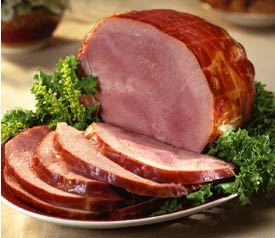
Third, well, I figured I'd have some deep thoughts but really the biggest question I've come up with over the past couple days was "how do they get ham in that shape? is there really a muscle that big on a pig?" (answer: yes) Fever hallucinations, what can I say. Back in top shape soon!

Saturday, October 27, 2012

Relationships are 2/3 made, 1/3 found.

Think about your favorite songs. I'd venture to guess that the reason you like them is not really the content of the song so much (although that is part of it), but the associations you have with them. A friend's recommendation, the first time you heard it, the general life context around when you heard it. It's not that the specific notes resonate with some inherent thing inside you, but rather that you decide you're going to like the song for whatever reason, and then you do.

Now think about your friends. There is certainly an element that you want to find certain people, people with certain characteristics, but really the reason your closest friends are your closest friends is largely because of the experiences you've had together.

I don't know what the exact fraction is, but it's certainly more "made" than "found."

Which leads to the question (of course this had to get back to technology at some point): why do online dating sites treat dating as a search problem? And if you were starting a new one, how could you get around that?

Here's an idea: you sign up on a site, they require a $100 deposit, then they assign you to do a certain (hopefully-fun) thing at a certain place/time. (with someone else, or with N other people.) If you don't show up, they keep your $100. So you show up, with the other people, and you all have an excuse to be there, and then you've started doing a thing with other people, which starts building these relationships.

It's like "forcing you to go on good dates" whether or not you have enough time, knowledge, or imagination to create good dates. (side note: coffee or food is generally not a good date.)

(also related: I've been reading So Good They Can't Ignore You. Your work is more made than found too.)

Sunday, October 14, 2012

Sometimes I'm not sure if I'll ever have a spare minute again

Things I've learned recently:

My mood depends (at least in part) on my productivity. If I feel like I'm getting things done, I feel like I'm kind of swimming at work, and I feel good. If not, I feel like I'm totally drowning. (This is new. On the upside, I'm never bored. On the downside, I feel like a heroin addict; addicts display increased rates of hyperbolic discounting, meaning they can't reason rationally about the future because they're so fixated on the next day or the next hour.)

My ability to work depends (at least in part) on my mood. Also, my mood is my mood; it is nice to be in a good one.
Therefore, it feels helpful to insert tasks that I can make progress on, to keep my mood up, between other tasks that are frustrating and difficult.
This is weird. It's like I've got a little homunculus in my head who controls whether my mind and body will be working right, and I've got to keep feeding him little productivity nuggets. Also, it's nice to do a little reality check if I feel drowney, realize that I won't always feel this way, and realize that maybe I just need a bit of sleep.

Thursday, September 27, 2012

Curating a party playlist

For the last ... three hours? I've lost track of time. This is a blast. I get so jazzed from:
1. listening to music in general
2. reminiscing about whatever memories come up when I listen to music
3. selecting a bunch of tracks that will completely impress and delight my friends
I ought to get into DJing. Then I could learn how to make a list of songs that actually sound good together.

Of course you're interested, so the list is below. Comments welcome, especially "I am impressed and delighted!"

(I should also mention that if you're looking for more ways to admire my vast decade of musical knowledge you can also find me on This Is My Jam or my music lists blog.)

Artist, Name, Album
The Books, IDKT, The Way Out
The Books, I Didn't Know That, The Way Out
The Books, Free Translator, The Way Out
Beirut, Brandenburg, Gulag Orkestar
Beirut, Postcards From Italy, Gulag Orkestar
Beirut, Mount Wroclai (Idle Days), Gulag Orkestar
Alexis Gideon, Liophant, Flight of the Liophant
Shugo Tokumaru, Parachute, Exit
Röyksopp, Happy Up Here, Junior
Orbital, Otono, The Middle Of Nowhere
Charlotte Gainsbourg, Master's Hands, IRM
Maritime, Adios, Glass Floor
Bobby Birdman, Victory At Sea, New Moods
David Byrne and Brian Eno, Strange Overtones, Everything That Happens Will Happen Today
Jens Lekman, A Sweet Summer's Night on Hammer Hill, Oh You're So Silent Jens
Stars, This Charming Man, Nightsongs
Architecture In Helsinki, Maybe You Can Owe Me, In Case We Die
Architecture In Helsinki, Do The Whirlwind, In Case We Die
William Shatner, Common People, Has Been
The Rapture, Get Myself Into It, Pieces Of The People We Love
The Rapture, I Need Your Love, DJ Kicks: Erlend Øye
Uusi Fantasia, Lattialla Taas / Venus [Acapella], DJ Kicks: Erlend Øye
Justus Kohncke, 2 After 909 / Intergalactic Autobahn [Acapella], DJ Kicks: Erlend Øye
Erlend Øye, The Black Keys Work [Phonique Rmx], DJ Kicks: Erlend Øye
Holy Fuck, Red Lights, Latin
The Human League, Do Or Die, Dare
Jupiter, Saké, Juicy Lucy
Jupiter, Avalon, Juicy Lucy
Calvin Harris, Stars Come Out, Ready For The Weekend
Justice, Canon (Primo), "Audio, Video, Disco"
Justice, Canon, "Audio, Video, Disco"
Gui Boratto, Colors, Take My Breath Away
Air, Cherry Blossom Girl, Talkie Walkie
Junior Boys, In the Morning, So This Is Goodbye
Hot Chip, One Pure Thought, Made In The Dark
Talking Heads, Genius Of Love (Tom Tom Club), Stop Making Sense (Special New Edition)
Talking Heads, Girlfriend Is Better, Stop Making Sense (Special New Edition)
The Go! Team, Panther Dash, "Thunder, Lightning, Strike"
The Go! Team, Ladyflash, "Thunder, Lightning, Strike"
U.S.E, Look At The City, Loveworld
Junior Senior, Move Your Feet, D-D-Don't Don't Stop The Beat
TV On The Radio, Dancing Choose, Dear Science (Deluxe Edition)
Broken Social Scene, 7/4 (Shoreline), Broken Social Scene
Andrew Bird, Fake Palindromes, Andrew Bird & The Mysterious Production Of Eggs
YACHT, Summer Song, See Mystery Lights
Cansei De Ser Sexy, Let's Make Love And Listen To Death From Above, Cansei De Ser Sexy
Grand Buffet, Things That Go Hump in the Night (Ultimate Remix), Five Years of Fireworks
Ariel Pink's Haunted Graffiti, Bright Lit Blue Skies, Before Today
Ariel Pink's Haunted Graffiti, Round and Round, Before Today
Air France, No Excuses, No Way Down
Metronomy, Everything Goes My Way, The English Riviera
Stars, Elevator Love Letter, Heart
Metric, Sick Muse, Fantasies
Metric, Satellite Mind, Fantasies
Hercules and Love Affair, Blind, Hercules and Love Affair
Mylo, Drop The Pressure, Destroy Rock & Roll
Mylo, In My Arms, Destroy Rock & Roll
Midnight Juggernauts, Road to Recovery, Dystopia
Blondie, Heart of Glass, Parallel Lines
Madness, Our House, Madness
Robyn, Dancing On My Own, Body Talk
Metronomy, Corinne, The English Riviera
Tarkan, Dilli Düdük, Turkish Hits Vol. 1
Blockhead, Grape Nuts and Chalk Sauce, Uncle Tony's Coloring Book
Janelle Monáe, Dance Or Die (Feat. Saul Williams), The ArchAndroid
Janelle Monáe, Faster, The ArchAndroid
Janelle Monáe, Locked Inside, The ArchAndroid
Yeasayer, ONE, Odd Blood
Balkan Beat Box, Sunday Arak (Featuring Dana Leong), Balkan Beat Box
Spoon, Don't You Evah, Ga Ga Ga Ga Ga
Foster the People, Call It What You Want, Torches
My Dear Disco, Amsterdam, Dancethink LP
Dismemberment Plan, The Other Side, Change
Bat for Lashes, Pearl's Dream, Two Suns
Massive Attack, Man Next Door, Mezzanine
The Earlies, Burn The Liars, The Enemy Chorus
The Flaming Lips, The W.A.N.D. (The Will Always Negates Defeat), At War With the Mystics
DJ Shadow, The Number Song, Endtroducing.....
Republica, Ready To Go (Album Mix), Ready To Go (Single)
Gnarls Barkley, Run (I'm a Natural Disaster), The Odd Couple
Gary Numan, Cars, The Pleasure Principle
Crystal Castles, Courtship Dating, Crystal Castles
The Prodigy, Girls, Their Law: The Singles 1990/2005
Friendly Fires, Skeleton Boy, Friendly Fires
Crystal Castles, Not In Love, Crystal Castles ( II )
Grand Buffet, Born In The USA, King Vision
The Police, Can't Stand Losing You, Outlandos d'Amour
Scissor Sisters, Comfortably Numb, Scissor Sisters
Ratatat, Falcon Jab, LP3
Barbara Morgenstern, Der Augenblick, Fjorden
Banco De Gaia, Farewell Ferengistan, Songs From The Silk Road
Beach House, Master Of None, Beach House
DJ Shadow, Changeling / Transmission 1, Endtroducing.....

Sunday, September 23, 2012

Wealth equals richness minus worry

I am not sure if there is anything to this, but bear with me for a minute:

Wealth = richness - worry.

"Richness" is pretty self-explanatory. Traveling in a private jet is richer than traveling in a Greyhound bus.

Eating artisan chocolate is richer than eating Hershey's. Eating fine steak is richer than eating burgers. But eating asparagus can be richer than eating a steak (if you really like asparagus or dislike steak) and eating a Starburst could theoretically be richer than either.
Living in a fancy house is richer than living in a shack. But living in a small house in a city can be richer than living in a big house in the suburbs, and living in a closet in NYC can be richer still.
An hour with a close friend is (usually) richer than an hour with a stranger. An hour with a close friend is usually richer than an hour playing computer games. Playing World of Warcraft is richer than playing Angry Birds. Playing chess (assuming you're actually thinking about it and digging it) is richer than playing crazy eights.

Richness (here synonymous with meaning) happens when your life matches your values.

"Worry" is also self-explanatory, but a little subtler. Worry is anything that makes you think about anything that's not richness.

Money causes worry. This is obvious. When you have to think about money, you are not thinking about the richness in your life.
Transportation causes worry. The fact that you have to get from point A to point B. (there can be richness in your transportation, like if you're riding a bike and you like biking, but the fact that you must do it is a worry.)
Your bank sending you paper statements causes (a tiny bit of) worry, because you have to think about them. Grocery store reward cards cause worry. Policies like "20% off on Tuesdays" cause worry by introducing mental complexity into your model of shopping.

Worry happens when you're forced to expend attention on anything that's not your values.

Corollary: Technology (or indeed, anything) adds wealth to your life if it increases richness or decreases worry.

Cloud storage, for example, is a great technology, because I no longer have to think about which computer I left my files on, or if they're backed up. mp3s are great because music increases richness in my life. Fitbit adds some richness (I love looking at data) and a little worry (I might forget it); so far, it's a net positive.

Corollary #2: False abstractions are plentiful; beware of them, and don't underestimate the worry they cause!

ATMs are great. They work worldwide. However, while I was in Poland, due to my bank getting bought out and them shipping me a new card, I got stranded pretty hard. Not that we have much of a choice to avoid ATMs these days, and the balance is still positive, but a couple days of frustration and inconvenience is not nothing.

Corollary #3: Maybe instead of "wealth", I mean "flourishing" or "happiness" or "the good life?" Which makes this either more or less profound. In a sense, it feels like I've really unlocked something smart here, an evaluation for anything: does this increase richness and/or decrease worry? However, maybe this is a tautology; maybe I've just said "Goodness equals good things minus bad things."

Friday, September 14, 2012

Things That Are Good

Less interesting-things, more my-life-journaling. If you want interesting things, see what research I'm thinking about. Here are some things that are good in my life now:

1. The HCII. The people are amazing. The students, the faculty, and the staff. It's a community (especially the PhD students) that will hang out outside work, that all cares about each other, that just sort of accepts that everyone is friends and everyone supports everyone else. And everyone I've met (I'm doing a mental check right now but I think, yep, everyone) is very good at what they do.

2. Being in grad school in general. I love the freedom to do what you're excited about. I love feeling "in the club" and invested in something that I care about.

3. Having some easy tasks and some difficult tasks to do. We just finished an interactive projected directory in the HCII lobby; a difficult task (and one that took much more weekend time than we had) but we pulled it off, and how! We demoed it to the cofounder of Adobe, who happened to be around, so that was neat. Anyway, that task helped me feel somewhat competent, but I'm also busy at things I'm much less competent at, so that'll keep me busy.

4. My old CMU friends (who are more and more not-from-CMU), my new CMU friends, and my roommates' friends. Making interesting friends just happens here, I guess.

5. Bikes and no sugar. I feel physically great. The only downside is that sometimes I'm not sleeping enough because I'm just too wired.

6. Pour-over coffee. I've started making my own. It's not as good as at Commonplace Coffee yet, but I'm on the way.

7. Pittsburgh! Love this place.

Saturday, September 01, 2012

HCII week two: uh, equally manic?

Weird. I feel like a different person here. The kind of person who has all the energy to do all those things that I wish I could do if I had all that energy. The kind of person who can do all those things I wish I could do if I were good at doing things. I'm sure the honeymoon will wear off eventually. In the meantime, it's still a lot of fun.

In other news:
Hunter-gatherers don't expend a lot more calories than us; the reason obesity is widespread is that we eat more than they.
Becoming an expert: a lot of these tips (but not all of them) seem to be summarized by "beginner's mind." Stay humble and eager!
Here's one person's advice on managing work. I want to round up a dozen super effective people in my field and ask them how they work on a day-to-day basis. There's probably not a huge amount that they do similarly, but there may be some telling common threads.

Saturday, August 25, 2012

HCII week one: manic.

Man! I've been zipping this whole week! A few reasons:
- our intro project in the HCII has been an interactive projector to display a department directory. This is the kind of quick-results programming that gets me zipping.
- meeting a lot of new friends and professors. The atmosphere is great. Everyone wants everyone else to succeed. (I've never visited a department where people wanted each other to fail, but I've seen places where people just kind of do their own thing and don't support each other so much.)
- hearing a lot of interesting research, and getting the chance to talk with lots of professors and decide what we want to work on.
- lots of stuff going on all the time!
I like this. It's exciting.

Sunday, August 19, 2012

Inbox zero, enjoy it while it lasts...

Tomorrow I start grad school. Well.

I'm excited to meet my new classmates and professors, moderately worried that I don't have The Right Stuff, proud to be officially in the club of researchers, afraid that I won't sleep enough, psyched to have careerish purpose, refreshed by a couple weeks with good friends and family, and itching to start building something again. Here goes!

Regularly scheduled cool-or-humorous-research blast

Interesting: Open plan offices are bad. I thought this debate was still open. Maybe the issue is that totally-open (as in the picture here) offices are bad, but the Microsoft room-with-door and the Google half-walled desks are both reasonable choices.

Lol: Fast cars actually do turn women on. I mean, seriously? It can't be the "successful guy who brings home the bacon" circuit firing, because they were just playing clips of engine roar, not mentioning anything about the price.

Interesting: Oxytocin makes you better able to detect emotional states. I'd love to have a before-and-after test with some labeled faces to try it out. Also, could that lead to improved empathy- the ability to feel other people's emotional states? And wouldn't that be incredibly revolutionary?

Lol: wearing blurry glasses just in case you might accidentally catch a glimpse of an attractive woman. But why stop there? Why not just blind yourself? You'd have to deafen yourself too, and cut off your nose, because you wouldn't want to catch a whiff of perfume. Technology tie-in: in the future, no doubt there'll be a Google Glass app that will use computer vision to find the women and just blur them. (of course, you'd have to switch back to all-blurred non-electronic glasses on the Sabbath.) WEIRD.

Interesting: Working out a lot doesn't make you sleep better. Thinking you worked out a lot makes you sleep better. That's... um, surprising. Counter-arguments: one two three.

Cool: Runner's high is real. Opioids!

Lol: I want to try a few days in a world where punishments are doled out in physical pain on the spot. You say something dumb at work, your boss punches you in the arm. You learn your lesson and it doesn't embarrass you forever or haunt you. Interesting: I guess that's Singapore?

Wednesday, August 15, 2012

No refined sugar

I don't* knowingly** eat refined or added sugar*** except on Saturdays.****

* I say "don't" instead of "can't" because it provides a different outlook. This is a lifestyle choice, not a restriction or ascetic self-denial. It's more effective that way.

** it's mostly easy to avoid sugars, but not entirely. After eating Chinese food, I realized that the sauce was probably half sugar. Same with baked beans. Luckily I can just laugh them off; it's not an allergy or anything.

*** basically I just want to quit refined sugar. But I don't mean I'm switching to honey or agave or something. Given a choice, I'd go with one of these over white sugar or HFCS, but generally, added sugars in all forms are out.

**** cheat days. Tim Ferriss's book is big on them, and I've talked to a couple people who have followed his diet who say that they really help. In my case, I didn't want to lose stuff like ice cream or biscotti for the rest of my life; this provides an easy outlet, while still cutting my sugar way down.

Why quit sugar? Because it's a clear win. I want a lot of years in my life, and I want a lot of health in those years. And sugar is (maybe after tobacco) probably the worst thing that modern Americans routinely put in our bodies.

Will it work? I think so. I've been doing this for a week and a half now. It's not really that hard. I've had to refuse a cookie once and ice cream twice.

Why now? Because I'm finally in a pretty stable form of life where I can relatively reliably control what food I eat. Because I'll be this way for 5-6 years, so any changes I make now will work over a pretty long timespan.

Wednesday, August 08, 2012

Whining is unattractive.

I went to an ATM. They wanted a $4 fee. I felt outraged! Four dollars just to get MY money?! But (and this is so simple but we forget it) it's a free market. PNC Bank is allowed to charge whatever they want for me to use the service that they provide (keeping my dollars safe and giving them to me anywhere I want). If I don't like it, I can go somewhere else.

I drove to Philadelphia on highway 76, paying about $35 in tolls on the way. Yow! Now, I can complain about the terribly unjust highway system, but they're the ones building the roads, and if our tax dollars aren't enough to cover the cost, well hey, it's an extra tax for the people who use the road. In a way, it's more fair than paying for roads with taxes.

At least under our current mostly-free market. You can argue that that should be changed; maybe you can argue that all banks should be forced to let any customer from any bank use their ATMs for free. Then you'd have to figure out how it's fair for us to force them to absorb this cost. You can argue that there are some fat cats in the system getting rich off the usurious tolls, but that requires more assumptions than "roads cost a lot to build" and so the burden of proof is on you.

If you're claiming moral indignation about something that's within the bounds of our market, and you don't have a better solution or a valid reason that it shouldn't be this way, you might just be whining.

(and if you go "what about media piracy?" I say read this; in short, downloading is the better solution.)

Saturday, August 04, 2012

Habits, in one blog post

There is a lot of information out there about habits. You can read it for days instead of starting a new habit. Your time is probably better spent actually working on your habits. So here's a guy who's been working with habits for a while, distilling all he's learned into one list. Seems at least largely in the right direction, and relatively concise and easy to read.

Making friends as an adult

This article talks about how people make fewer friends as they get older. It mostly sounds depressing: parents who make friends only when their kids do, busy people who deduct points from friends if they're late, retirees who find themselves totally friendless.

More interestingly, though:
"...the three conditions that sociologists since the 1950s have considered crucial to making close friends: proximity; repeated, unplanned interactions; and a setting that encourages people to let their guard down and confide in each other..."

Seems simple enough. Why not create that environment after college too?

Tuesday, July 31, 2012

I hope artisan food is a sign of things to come

I don't know what to think after reading this bit about Mast Brothers Chocolate. It's artisan chocolate, hand-made, perfectly controlled and sourced and decorated etc. And they're doing well. As the article argues, this is how large portions of the economy will go: the stuff that can get mass-produced and automated will, while the stuff that people will pay for because it's handmade will be handmade. McDonald's will be in a vending machine, and artisan chocolate will stil cost $8 a bar, and both will survive.

It sounds great, really: once McDonald's automates all its workers away, there'll be more workers available. Maybe they can work on artisan chocolate. Or maybe artisan furniture, if they prefer, or paintings or whatever. Then all we need people to do is buy artisan _____. This is the sticky part of the argument: how can you expect people to buy artisan _____ when they don't now? I don't know, but personal experience in suburban Cleveland shows me that if you open a small business selling high-quality gelato, bread, or olive oil (to name only the businesses within a couple blocks), people who have some money will buy it.

But then, this is based on experiences in suburban Cleveland and doesn't really give a view across classes. I wonder what our many people working for minimum wage think.

Which candidate do you actually agree with most?

I Side With: hopefully the only thing I'll post about this year's presidential election. Huh, I'm with Jill Stein. Too bad we don't have a good voting system, or I'd vote for her.

The one thing that's reassuring to know is that I actually agree with Barack a lot and disagree with Mitt a lot. This is reassuring if I am to talk politics ever (which I hope I don't); it reassures me that I'm actually voting for what I believe in, and not just going along with everyone in my demographic. Anyway, this site is great and everyone should be forced to take a quiz like this before voting. (kidding, but only a little bit.)

My probably temporary descent into Diablo 3

I don't get into most big-budget AAA computer games. Last game I really loved was probably Super Crate Box. I got into Braid too. But the last big game I really really liked was Diablo 2.

In Diablo 2, you kill monsters and gain levels and find magical items. When you gain levels you get better at killing bigger monsters and finding fancier items (which in turn make you better at killing monsters). It might be hard to explain to non-gamers why this is so fun. I guess it's challenges with clear parameters and units of progression as well as unpredictable rewards. I can't think of a real world example.

from the super weird but wonderful ebbits

Diablo 3 is just like Diablo 2 except that the parts that used to be crummy are now great. Trading used to be one-to-one, currencyless, and inefficient; now there's an auction house. When you played with friends, you used to have to fight to grab the loot dropped by a monster; now everyone gets his own. You used to have to chug potions, now you can only depend on one every 30 seconds. You used to have to choose all your skills once, now you can change them constantly. I could go on.

This is wonderful; I am glad to see them take this pretty-good game and refine it until it's super-good. I am glad to see anyone take anything and improve it relentlessly, for a decade or more, until it's the most user-friendly frictionless thing it can be.

This is also potentially terrible, because it's like refining a drug. (interesting side note: meth sends your dopamine levels 3-4x higher than cocaine or orgasms. can't imagine what the heck that feels like. am curious. won't try it, don't worry.) So of course I'm kind of addicted. But I know I've got about two weeks of down time in Cleveland before I move to Pittsburgh and start life over again, and I'm prepared to quit cold turkey when I move because that'll be much more exciting.

(also prepared to keep D3 as a sometimes hobby, because it really fires me up to play it. might be nice to have something I can do for an hour here or there to keep me in that active mindset. we'll see.)

Wednesday, July 11, 2012

Drugs, getting old, and terrorists

What is the most harmful drug? Not cocaine or heroin, but alcohol. (when you take into account the damage to society as well as damage to the user.) This article was written based on a 1-day workshop held by a bunch of drug experts. In open discussions, they divided all drug harms into 16 types, weighted them, and rated each drug on each type of harm.
Interesting numbers (100 is the most harmful):
Alcohol: 72
Heroin: 55
Crack: 54
Crystal Meth: 33
Cocaine: 27
Tobacco: 26
Speed: 23
Cannabis: 20
Ecstasy: 9
LSD: 7
Mushrooms: 5

I'm surprised alcohol is as high as it is, of course. I wonder how much of that is because it's so widely used. That is, if it were as illegal and taboo as say cocaine, would its rating be in the 20's also? (I'm sure the authors addressed this, and I would love to know, but the article is paywalled.)
I'm surprised cocaine and speed are as low as they are. I thought speed was meth; shows what I know. I'm surprised cannabis is as high as it is; I thought it was virtually harmless. And check out where all the hallucinogens are! (Well, the Dutch could have told you that. Also, I wonder if they've taken into account the benefits of mushrooms.)

It should be noted for my dad's sake that the authors did not consider the conscription risks of mushrooms.

When do we stop being interested in new things? For new foods, 39. For new experiences, twenty-three. Aw hell. For new music, about 20. So 2004 might always be the best year in music. (I'm basing this solely off Blueberry Boat, the Moon and Antarctica, and Funeral. Correct me if I'm wrong.)

How many people do terrorists kill? In the UK, less than bathtub drownings, and as many as bee stings.  In the US, as many as are crushed to death by furniture. The moral of the story is, watch out for your furniture.

Wednesday, July 04, 2012

Ishmael, by Daniel Quinn


I finally read this thing. It's about a gorilla and a guy who discuss how the world/environment got to be this way, and how we can save it.

In short: At the time of the agricultural revolution, people became able to decide which animals live and which die. And we developed external morality, which let us say "we *should* live and they *should* die." We're stuck in this pattern of living, running the planet into the ground, but that's our story and so we're going to stick to it. You can't just say "we're not going to do this", you have to replace it with something you ARE going to do.

Interesting. A couple questions I'm left with:
- is non-agricultural life really as nice as he says? You're really at nature's mercy. But I guess if that's woven into your culture, you're more okay with it, as opposed to us who fight death and disease tooth and claw.
- are you sure there's no actual goal that our civilization can achieve? For example, if there was some ultimate external good that came from Pogs, then the whole agricultural thing would be totally justified and great because it would be the best way for us to make a ton of Pogs. Less comically, maybe we post-agricultural "civilized" humans will achieve the Singularity, upload ourselves, and live a really utopian life. I'm not sure if we could get there without going through a few thousand years of miserable agricultural life first.
- he argues that we've taken ourselves out of evolution, and that really a lot of species are evolving towards self-consciousness if we'd just let them live. I hate when people say that we've taken ourselves out of evolution! Evolution just works differently now.

I kind of gave up on improving the whole world a few years ago, figuring I ought to improve myself first. Sometimes that (and my questions above) feel sort of like cop-outs.

At any rate, read this book! I quite enjoyed it. Quick read, too.